How to Find a Differentiated Content Angle and Build a Winning Content Brief
6 repeatable angle types + the Skyscraper method updated for 2026. Includes a complete content brief template with H2/H3, angle, and conversion planning.
The first page of Google is a crowded room. For most commercial keywords, ten articles are already there, and most of them say roughly the same thing. They use the same statistics from the same industry reports. They quote the same experts. They recommend the same three products. A reader could close their eyes, pick a result at random, and get 80% of the same information.
This is why angle matters more than length. A 2,000-word article with a clear, original angle will outperform a 5,000-word rehash every time. The angle is the reason someone clicks your link instead of the nine others. It is also the reason other sites link to you, AI engines cite you, and readers remember your brand.
This article covers two connected steps. First, how to find a differentiated angle using six repeatable frameworks and a three-question SERP audit. Second, how to capture that angle in a content brief that becomes the blueprint for your writer—so the final article does not drift back into generic territory during production.
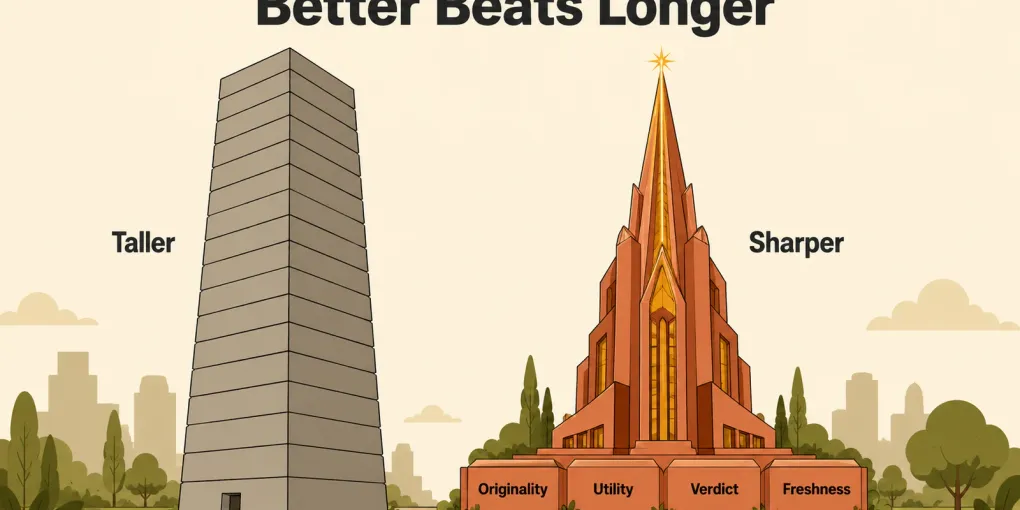
Why “Better” Beats “Longer” in 2026
The Skyscraper Technique, popularized by Brian Dean, originally taught marketers to find the tallest content piece in a niche and build something taller. In 2018, that often meant adding 1,000 more words. In 2026, that strategy is exhausted. Readers do not want taller. They want sharper.
Google’s Helpful Content System and AI Overviews both reward content that answers a specific question quickly and authoritatively. A 600-word article that gives a clear verdict with original data will outrank a 4,000-word guide that buries the answer under generic background.
The new Skyscraper is not about word count. It is about:
- Originality: Data, research, or experience no one else has published.
- Utility: Tools, templates, or checklists the reader can use immediately.
- Verdict: A clear recommendation, not a fence-sitting summary.
- Freshness: Updated data, new examples, or corrected misinformation.
The 6 Angle Types (with Real Examples)
https://yepsoso.com/images/content-angle-competitive-brief-six-angles.webp
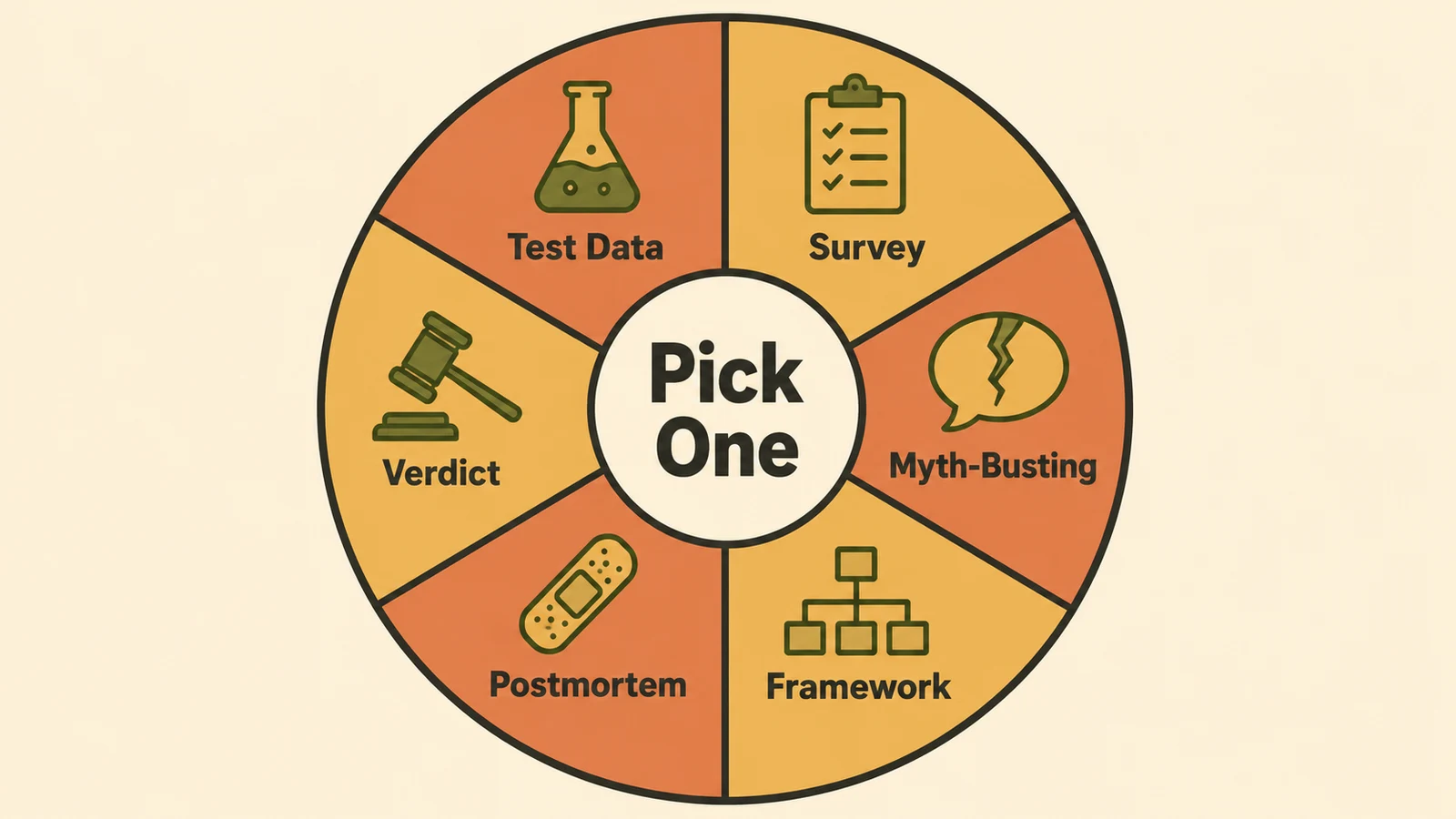
You do not need to invent a new angle from scratch every time. These six types cover most high-performing content. Pick one per article. Do not combine two—diluted angles read like unfocused articles.
Angle 1: First-Hand Testing or Data
You ran an experiment, collected real metrics, or surveyed actual users. The result is a piece of content no competitor can replicate without doing the same work.
Real example: A coffee equipment retailer tested five burr grinders by running 100 grams of the same medium-roast beans through each, measuring particle size distribution with a sieve set, and timing the grind. The article published the raw data table, a scatter plot of consistency scores, and a clear verdict: “Grinder C produced the most uniform particles for espresso, but Grinder A was twice as fast and good enough for pour-over.”
Why it works: Original data is a natural link magnet. Other blogs, forums, and even AI engines cite it because they cannot find the same information elsewhere.
Angle 2: Original Research or Surveys
You polled your customer base, scraped public data, or analyzed a dataset no one had connected to your topic.
Real example: A project management SaaS company surveyed 400 freelance designers about their invoicing habits. They discovered that 62% still used spreadsheets despite owning accounting software, and the main reason was “the software’s invoice templates look corporate and scare clients.” The article published the survey methodology, the full results, and a recommendation: “Freelancers need invoicing tools with customizable, friendly templates more than they need advanced tax features.”
Why it works: Surveys produce quotable statistics. Journalists and bloggers reference them. The data becomes a brand asset you can reuse in sales decks, webinars, and PR pitches.
Angle 3: Myth-Busting or Correction
A common belief in your industry is wrong, outdated, or oversimplified. You correct it with evidence.
Real example: A solar panel installer published “Why Your Solar Payback Calculation Is Probably Wrong.” The article explained that most online calculators use average national electricity rates, but real payback depends on time-of-use rates, net metering policy changes, and panel degradation curves. It included a corrected calculator with inputs for local utility rules.
Why it works: Contrarian content triggers curiosity. Readers click to see if their assumptions are wrong. It also positions your brand as the honest, expert voice in a field full of simplified marketing claims.
Angle 4: Decision Framework or Checklist
You turn a vague, stressful decision into a structured process. The reader leaves with a tool, not just information.
Real example: A commercial kitchen supplier published “The 4-Question Ice Machine Sizing Framework.” Instead of listing 10 products, the article asked: (1) How many pounds of ice do you use on your busiest day? (2) Do you need ice on display or only in the kitchen? (3) Is your ambient temperature above 80°F? (4) Do you have floor drain access? Based on the answers, the article recommended a size and type with a one-page PDF checklist.
Why it works: Frameworks are reusable. Readers bookmark them, print them, and share them with colleagues. They also make your brand the default reference for that decision.
Angle 5: Failure Postmortem
You describe a real project or decision that went wrong, what you learned, and how you fixed it. This is content AI cannot generate because it requires lived experience.
Real example: A software development agency published “We Migrated to Kubernetes and Doubled Our Hosting Bill: What We Learned.” The article detailed the original cost assumptions, the unexpected expenses (monitoring tools, specialist contractors, redundant clusters), the actual performance gains (minimal), and the revised architecture they settled on. It included real dollar figures.
Why it works: Vulnerability builds trust. Readers believe you because you admitted a mistake. The specificity of real numbers and real timelines makes the content impossible to fake.
Angle 6: Comparison with a Clear Verdict
You compare two or more options and give a recommendation with conditions. Not “both are good.” Not “it depends.” A real verdict.
Real example: A CRM comparison article did not list features side by side. It gave a verdict: “If your team is under 10 people and you live in Google Workspace, use HubSpot. If you are 20+ people with complex sales stages and need custom automation, use Salesforce. If you are a freelancer who only needs client tracking and invoicing, use neither—use HelloBonsai.” Each verdict included a one-sentence reason.
Why it works: Buyers want confidence. A clear verdict saves them decision fatigue. It also earns trust because you recommended a competitor when that was the honest answer.
The 3-Question SERP Audit to Find Gaps
https://yepsoso.com/images/content-angle-competitive-brief-serp-audit.webp

Before you pick an angle, audit the top 10 results for your target keyword. Ask three questions:
Question 1: What Did They Not Answer?
Read the top 3 articles carefully. Look for questions they raise but do not resolve. A “best laptops for remote work” article might mention battery life but never test real-world video-call drain. A “how to choose a CRM” article might list features but never explain implementation timelines.
Action: Open a note. Write down 3–5 unanswered questions per top result. The most common unanswered question is your angle opening.
Question 2: What Is Vague or Outdated?
Check dates, statistics, and product references. If the top article cites “a 2022 Gartner report” and newer data exists, freshness is your angle. If it says “most teams use spreadsheets” without a source, original research is your angle. If it recommends a product that was discontinued, updated testing is your angle.
Action: Verify every major statistic in the top 3 results. Note which ones are outdated, unsourced, or contradicted by newer data.
Question 3: What Do Real Users Still Complain About?
Search Reddit, Quora, industry forums, and product review comments for your target topic. Look for threads where users say “but none of the articles mention…” or “every guide ignores…” These are explicit gaps.
Real example: For “best standing desk,” Reddit threads frequently complain that review sites test stability with empty desks, not with three monitors and a laptop. A first-hand stability test under real load is an obvious angle gap.
Action: Search [topic] reddit and [topic] forum. Read 10–15 comments. Copy verbatim complaints into your brief under “Angle Gap Evidence.”
Building the Content Brief (The Pre-Writing Blueprint)
A content brief is not a suggestion. It is a contract between strategy and execution. A good brief prevents the writer from drifting into generic territory, forgetting the conversion path, or missing must-cover topics.
The Brief Template
Use this structure for every article:
1. Metadata
- Target keyword:
- Secondary keywords (3–5):
- Search intent type (A–F):
- Target word count (aligned to SERP average, not arbitrary):
- Pillar or cluster position:
2. Angle Statement
- One sentence: “This article wins because it _______.”
- Example: “This article wins because it publishes original particle-size test data on five grinders under $200, giving readers a verdict no competitor has measured.”
3. Audience and Context
- Who is reading this? (Job title, experience level, pain point)
- What have they already tried? (So you do not waste time on basics they know)
- What decision are they trying to make? (So the CTA matches their stage)
4. Must-Cover Topics
- From shared H2s in top 5 results (the baseline):
- From PAA questions (the direct answers):
- From angle gap research (your differentiation):
5. Differentiation Asset
- What original element will this article include? (Data, test, framework, case study, template, tool)
- Who is responsible for producing it? (Writer, designer, engineer, sales team)
- Deadline for asset completion:
6. H2/H3 Outline
- H1 (exact title):
- H2 sections with proposed H3s:
- Note: every H2 must serve the single intent stated in the brief. Off-topic H2s get cut or moved to a different article.
7. Link and Conversion Plan
- Upward link to pillar (anchor text):
- Sideways links to related clusters (URLs + anchor text):
- Conversion exit: product page, lead magnet, or CTA form:
- CTA copy (exact wording, not generic “Contact Us”):
8. Voice and Style Notes
- Tone: (e.g., “experienced consultant talking to a busy operations manager”)
- Forbidden words/phrases:
- Required formatting: (tables, checklists, video embeds, etc.)
9. Competitive Benchmarks
- Top 3 URLs and their weaknesses:
- What we do better:
10. Success Metrics
- Target ranking position (realistic for site stage):
- Target traffic (month 3, month 6):
- Target conversion event:
Skyscraper in 2026: Original Assets Over Cold Outreach
https://yepsoso.com/images/content-angle-competitive-brief-asset-links.webp

The original Skyscraper Technique ended with mass email outreach: find sites linking to the old tall content, email them saying yours is better, and ask for a link. That worked in 2015. It barely works now.
B2B cold email reply rates have fallen to 1–5%. Most outreach emails are filtered by AI assistants, marked as spam, or ignored by editors who receive dozens of similar pitches daily. Mass templated outreach is no longer a viable link-building strategy.
The replacement is natural link acquisition through original assets:
- Original data and charts: Publish a dataset or visualization that journalists and bloggers want to reference. A well-designed chart on “average SaaS churn by vertical” earns links from industry publications without any outreach.
- Free tools and calculators: A “CRM ROI Calculator” or “Solar Payback Estimator” earns links from resource pages, Reddit threads, and educational sites.
- Digital PR: Run a survey, publish the results, and pitch the story angle (not the link) to journalists who cover your industry. The link follows the coverage.
- Content refresh: Update your old high-performing articles with new data, new examples, and corrected information. Then reach out to sites that linked to the old version. This is the only outreach that still works well—because you are offering them a fix, not asking for a favor.
Action: Allocate 30–40% of your content production time to original assets (data, tools, frameworks). Allocate 10% to highly personalized outreach for content refresh. Allocate 0% to mass cold email templates.
FAQ
Q: What if I cannot produce original data or run tests?
Use the framework, checklist, or myth-busting angles. These require expertise and synthesis, not a laboratory. A “How to Choose” framework is original if you built it from real customer conversations. A myth-busting article is original if you correct a common misconception using client case studies.
Q: How do I know if my angle is too narrow?
If the angle only appeals to 1% of your target audience, it is too narrow. “Best standing desk for left-handed programmers over 6’2"" is a niche. “Best standing desk for tall users” is an angle. The test: can you explain the angle to a colleague in one sentence without them asking “who cares?”
Q: Should every article have an original angle?
Ideally, yes. Practically, prioritize angles for articles targeting commercial intent (selection, comparison, application) and high-volume informational terms. A basic “What Is X” definition post can succeed with strong EEAT signals and clear structure even without a radical angle—though even there, a myth-busting hook (“Most people think X means Y, but it actually means Z”) helps.
Q: How long should a content brief be?
A brief for a 2,000-word article should be 400–600 words. It is not a draft. It is a blueprint. If it is shorter than 300 words, it is probably missing the angle statement, must-cover topics, or conversion plan. If it is longer than 800 words, the writer may feel constrained and produce robotic copy.
Q: Can I use AI to generate the brief?
AI can help assemble the competitive benchmark and must-cover topics by scraping SERP data. It cannot pick the angle. Angle selection requires judgment about your brand’s unique assets, your team’s capabilities, and the emotional gaps in existing content. A writer who receives an AI-generated brief without a human-selected angle will produce an article that is structurally correct and emotionally empty.
What Comes Next
A strong brief is worthless if the execution sounds like everyone else. Once your brief is approved, the next step is defining the voice, tone, and content templates that keep every writer on-brand and every article matched to its intent.
If you have not yet analyzed the search intent for your target keywords, read our guide on how to analyze search intent and map content to the buyer’s journey before finalizing your brief. The brief must serve the intent, not fight it.
And once the article is drafted, run it through a de-AI pass to remove the generic patterns that make content forgettable.
Last updated: June 2026