
How to Analyze Search Intent and Map Content to the Buyer's Journey
The 3C framework (Content type, format, angle) + 6 intent types with real examples from software, e-commerce, and service businesses. Includes a content-to-journey mapping table.
You can rank number one for a keyword and still fail. It happens when someone searches “best project management software for construction crews,” clicks your result, and lands on a 3,000-word history of project management theory. They wanted a comparison table with pricing, mobile app ratings, and offline-sync capabilities. You gave them a textbook chapter. They bounce in eight seconds. That behavior sends the wrong satisfaction signals, and rankings often follow.
Search intent is not a bonus consideration. It is one of the first constraints your content has to satisfy. Google’s quality rater guidelines and major search updates—from Hummingbird to the Helpful Content System—keep pointing in the same direction: match what the user wants, not what you wish they wanted to read.
This article covers two connected processes. First, how to read a SERP and classify intent using a practical 6-type system. Second, how to map each intent type to a buyer journey stage, a content template, and a conversion path that turns readers into leads.
Why Intent Beats Volume
A keyword with 500 monthly searches and perfectly matched intent will convert better than a 10,000-volume keyword with mismatched intent. We have seen this repeatedly across client accounts:
- A SaaS company ranked first for “what is inventory management” (8,200 volume). The page generated 340 visits a week and 2 trial signups.
- The same company ranked fifth for “inventory management software for restaurants” (320 volume). The page generated 45 visits a week and 11 trial signups.
The lower-volume term won because the intent was commercial and specific. The searcher had a use case, a budget category, and a decision timeline. The high-volume searcher was a student writing a paper.
Content teams often look at behavior signals like dwell time, pogo-sticking (clicking back to the SERP quickly), and subsequent query refinement because they reveal whether the page actually helped. When your content satisfies intent, users stay, scroll, click internal links, and convert. When it does not, they leave fast, and the page has a much harder time holding its position.
The 3C Framework: Type, Format, Angle
https://yepsoso.com/images/search-intent-content-mapping-3c-framework.webp
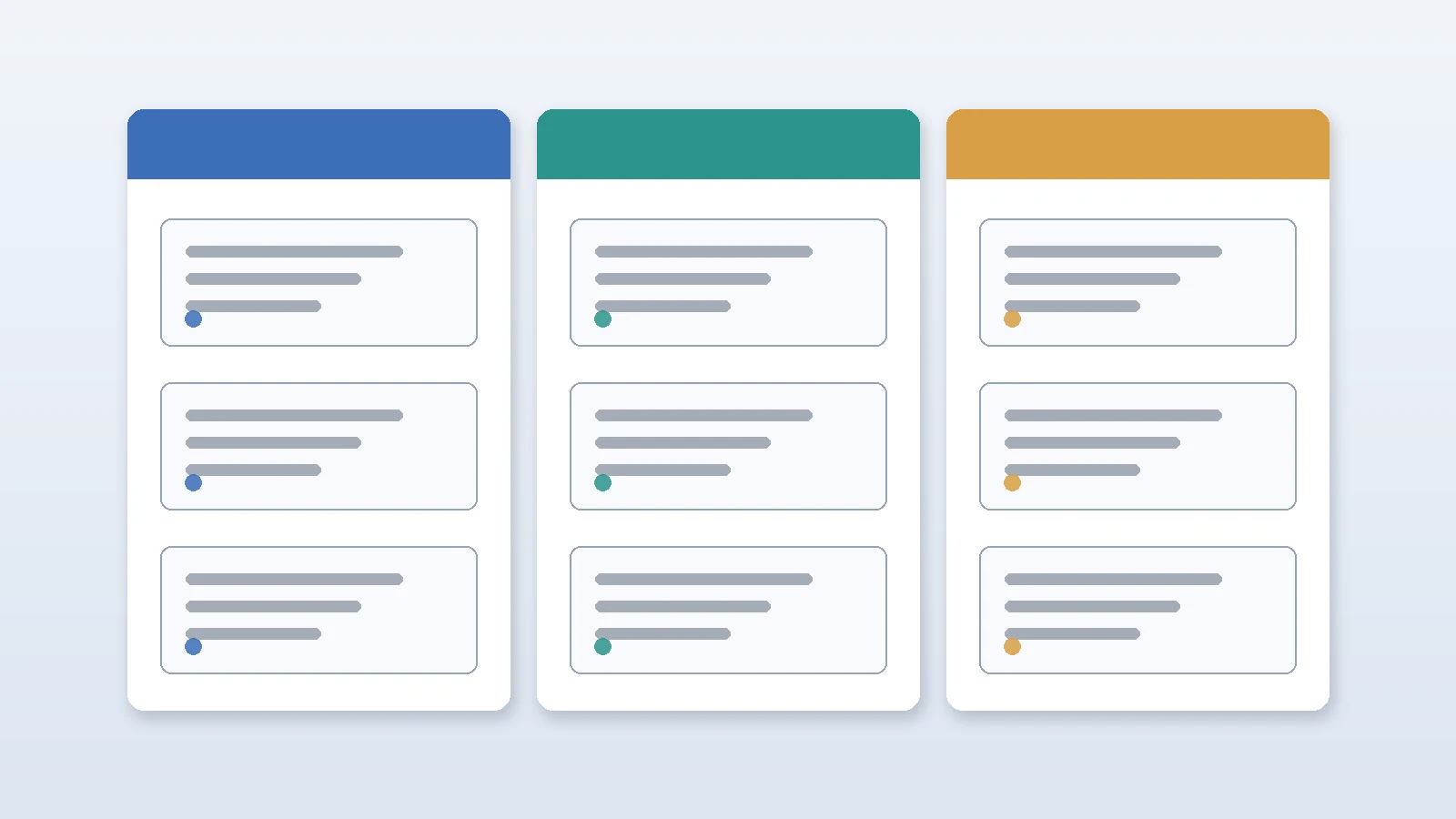
Before you write, search your target keyword in an incognito window and analyze the top 10 results, especially the top 3. Record three attributes for each:
Content Type: What is the page? A blog post, a product page, a category page, a video, a tool or calculator, a forum thread?
Content Format: What structure dominates? A how-to guide, a listicle, a comparison table, a definition/explainer, a case study, a tool or template download?
Content Angle: What is the hook? “Best for beginners,” “Expert review after 6 months of use,” “Free template included,” “Updated for 2026 tax rules.”
If 7 of the top 10 are blog posts and 3 are product pages, a product page will struggle to rank—Google has decided this query deserves editorial content. If the top 3 all include video embeds, you probably need video. If the top result is a calculator and you are planning a 2,000-word article, reconsider.
Action: Open a spreadsheet. List the top 10 URLs for your target keyword. Tag each with Type, Format, and Angle. Look for the majority pattern. That pattern is your baseline.
The 6 Intent Types in Practice
https://yepsoso.com/images/search-intent-content-mapping-six-intents.webp
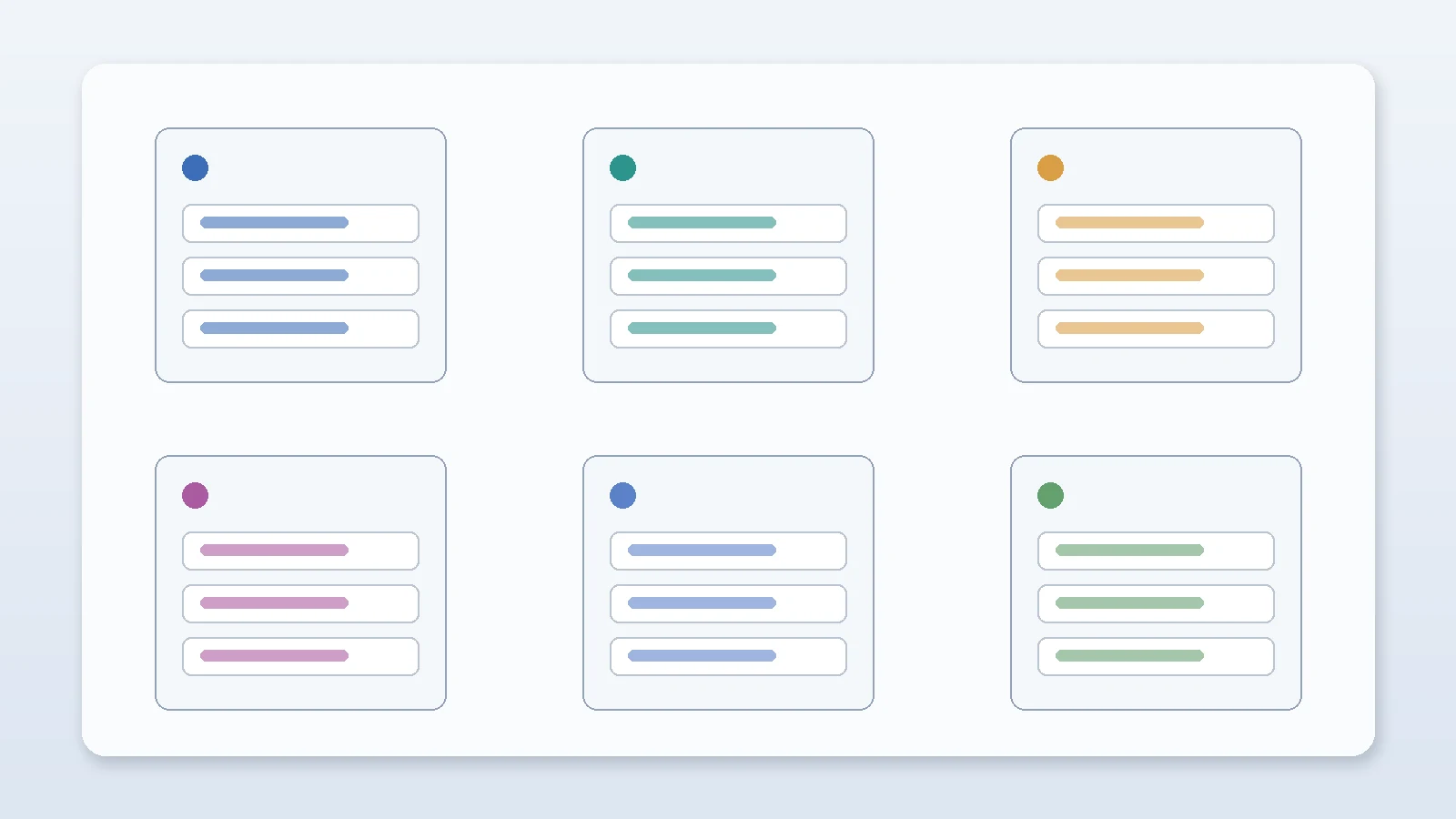
The classic SEO framework uses four intents: Informational, Navigational, Commercial Investigation, and Transactional. That is useful for high-level strategy but too coarse for content planning. We use six operational types that map directly to content decisions.
Type A: Awareness / Educational
Keyword signals: what is, basics, types of, how does, introduction to, explained simply
User need: They do not know the category well. They are learning concepts, definitions, and boundaries.
Content match: Explainer article, definition post, “types of” listicle, infographic.
Real example: A company selling automated payroll software targets “what is payroll automation.” The article defines the term, lists the main components (time tracking, tax calculation, direct deposit, compliance reporting), and explains why manual payroll fails at 50+ employees. It does not push the product hard. It educates.
Buyer stage: Early awareness. They are months from purchase.
CTA strength: Soft. Offer a beginner’s guide PDF or a newsletter signup. Do not ask for a demo.
Type B: Selection / How to Choose
Keyword signals: how to choose, selection guide, buying guide, what to look for, criteria for
User need: They know the category exists and they need one. They do not know how to evaluate options.
Content match: Step-by-step selection guide, criteria checklist, decision framework.
Real example: A commercial kitchen equipment supplier targets “how to choose a commercial ice machine.” The article walks through daily volume needs, ice type (cube, flake, nugget), condenser type (air-cooled vs. water-cooled vs. remote), and space constraints. It includes a printable checklist.
Buyer stage: Active evaluation. They are building a shortlist.
CTA strength: Medium. Offer a sizing calculator, a spec sheet download, or a “talk to our equipment specialist” form.
Type C: Comparison
Keyword signals: vs, compared to, difference between, which is better, alternative to
User need: They have narrowed to 2–4 options and need a verdict.
Content match: Side-by-side comparison table, pros/cons list, verdict-driven analysis.
Real example: A CRM software blog targets “HubSpot vs. Salesforce for real estate.” The article does not list generic features. It compares the two specifically for real estate workflows: lead routing from Zillow integration, commission tracking, mobile app offline access, and transaction pipeline customization. It gives a clear recommendation with conditions.
Buyer stage: Late evaluation. They are close to decision.
CTA strength: Strong. Offer a free trial, a personalized demo, or a migration assessment.
Type D: Application / Scenario
Keyword signals: for [use case], best for [industry], in [environment], when [condition]
User need: They have a specific situation and need to know what works in that context.
Content match: Scenario solution article, use-case guide, industry-specific recommendation.
Real example: A rugged laptop manufacturer targets “best laptops for construction site managers.” The article covers MIL-STD-810G ratings, sunlight-readable screens, hot-swappable batteries, and dust ingress protection. It recommends three models with specific environmental ratings.
Buyer stage: Evaluation to purchase. They have a budget and a timeline.
CTA strength: Strong. Direct product links, quote request, or “configure for your site” tool.
Type E: Technical / Parameter
Keyword signals: explained, what does mean, how to calculate, vs [technical spec], importance of
User need: They need to understand a technical concept to make a design, configuration, or purchase decision.
Content match: Technical explainer, formula walkthrough, datasheet interpretation guide.
Real example: A solar panel installer targets “solar panel efficiency explained.” The article defines efficiency ratings, explains why 22% vs. 19% matters in kilowatt-hours per roof square foot, and shows a real payback calculation for a 2,000-square-foot residential roof in Arizona.
Buyer stage: Learning stage, often pre-evaluation. They are building the knowledge to choose.
CTA strength: Soft to medium. Offer a design consultation or a roof assessment tool.
Type F: Design / Engineering
Keyword signals: design guide, materials, dimensions, layout, how to build, prototype, simulation
User need: They are building or customizing something. They need engineering-level detail.
Content match: Design tutorial, material selection guide, CAD template, prototyping checklist.
Real example: A 3D printing filament supplier targets “how to design snap-fit joints for PLA.” The article covers cantilever beam formulas, recommended deflection ratios, tolerance allowances for FDM printers, and includes a downloadable test specimen STL file.
Buyer stage: Development. They may become a long-term material customer.
CTA strength: Medium. Offer material samples, engineering support, or a design review.
Mining SERP for Your Content Skeleton
https://yepsoso.com/images/search-intent-content-mapping-serp-workflow.webp
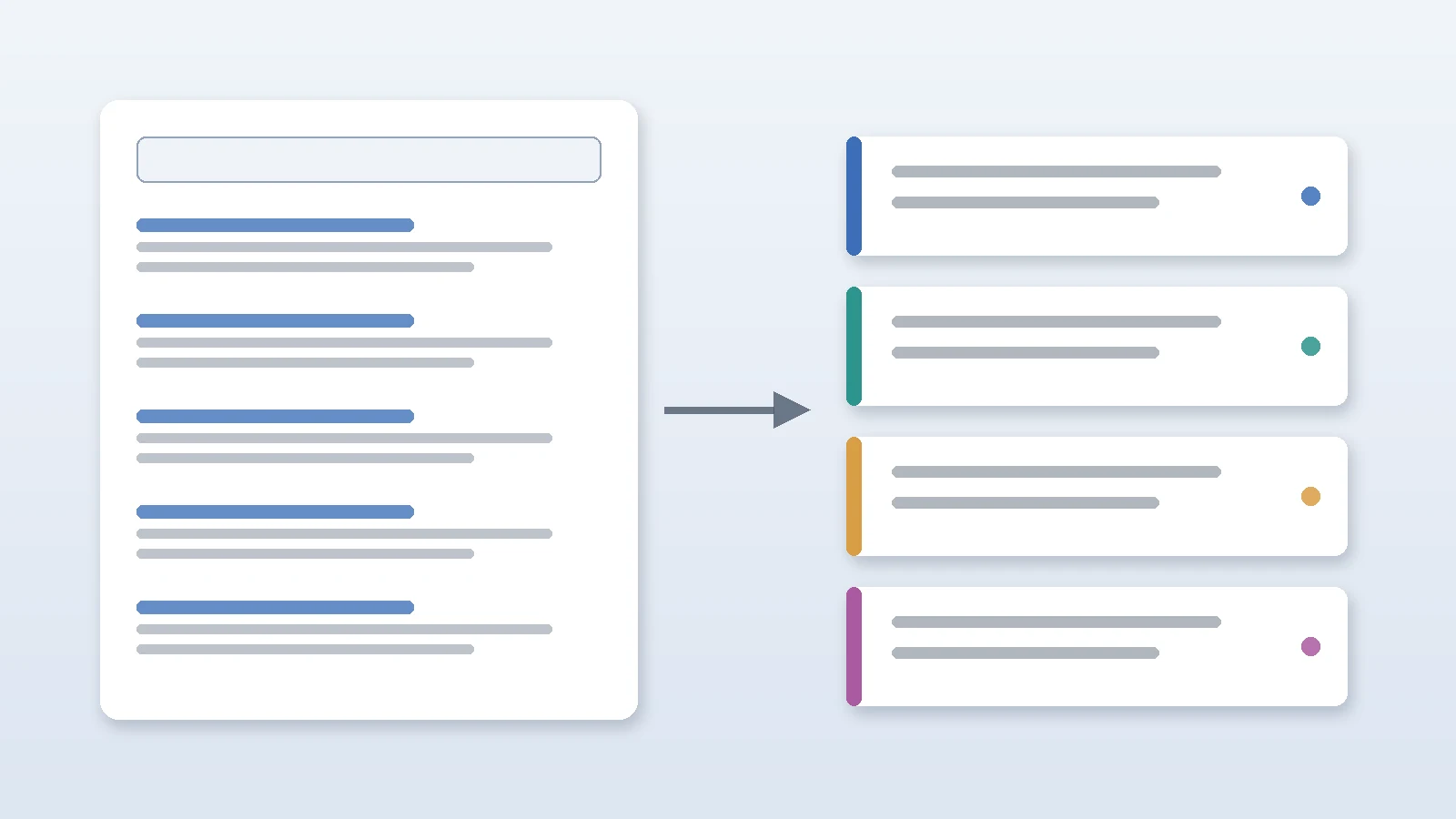
The top-ranking pages give you a live view of what Google currently rewards for that query. Your job is not to copy them. It is to identify what they all agree on (the baseline) and where they are weak (your opening).
Shared H2s = Required Coverage
Open the top 5 results. Copy every H2 heading into a list. Look for overlap. If 3 of 5 articles have an H2 like “Battery Life Considerations” for a “laptop for remote work” query, that topic is non-negotiable. Your article needs a section on battery life.
Action: Build a “must-cover” list of 5–8 H2 topics from shared headings. These become the backbone of your outline.
People Also Ask = Direct Questions to Answer
The PAA box is a useful intent probe. Each question represents a query pattern Google thinks is related. Answer these questions explicitly in your content, ideally as H3s under a relevant H2.
For a “how to choose a CRM” query, PAA might surface:
- What is the easiest CRM to use?
- How much does a CRM cost for a small business?
- Can I use Excel instead of a CRM?
- What features should a CRM have?
Each of these is a content section. The last one—“Can I use Excel instead of a CRM?”—is especially valuable because it addresses a hidden objection. Answer it honestly. If Excel works for sub-10-contact businesses, say so. Then explain the breaking point where a CRM becomes necessary. That honesty builds trust and keeps readers on the page.
Related Searches = Adjacent Intent Opportunities
Scroll to the bottom of the SERP. The related searches often reveal broader or deeper intents. If you see “CRM for real estate” and “CRM for nonprofits” as related searches, those are separate articles in your cluster—not subsections of the current one.
Mapping Intent to Buyer Stage and Conversion Path
https://yepsoso.com/images/search-intent-content-mapping-conversion-path.webp
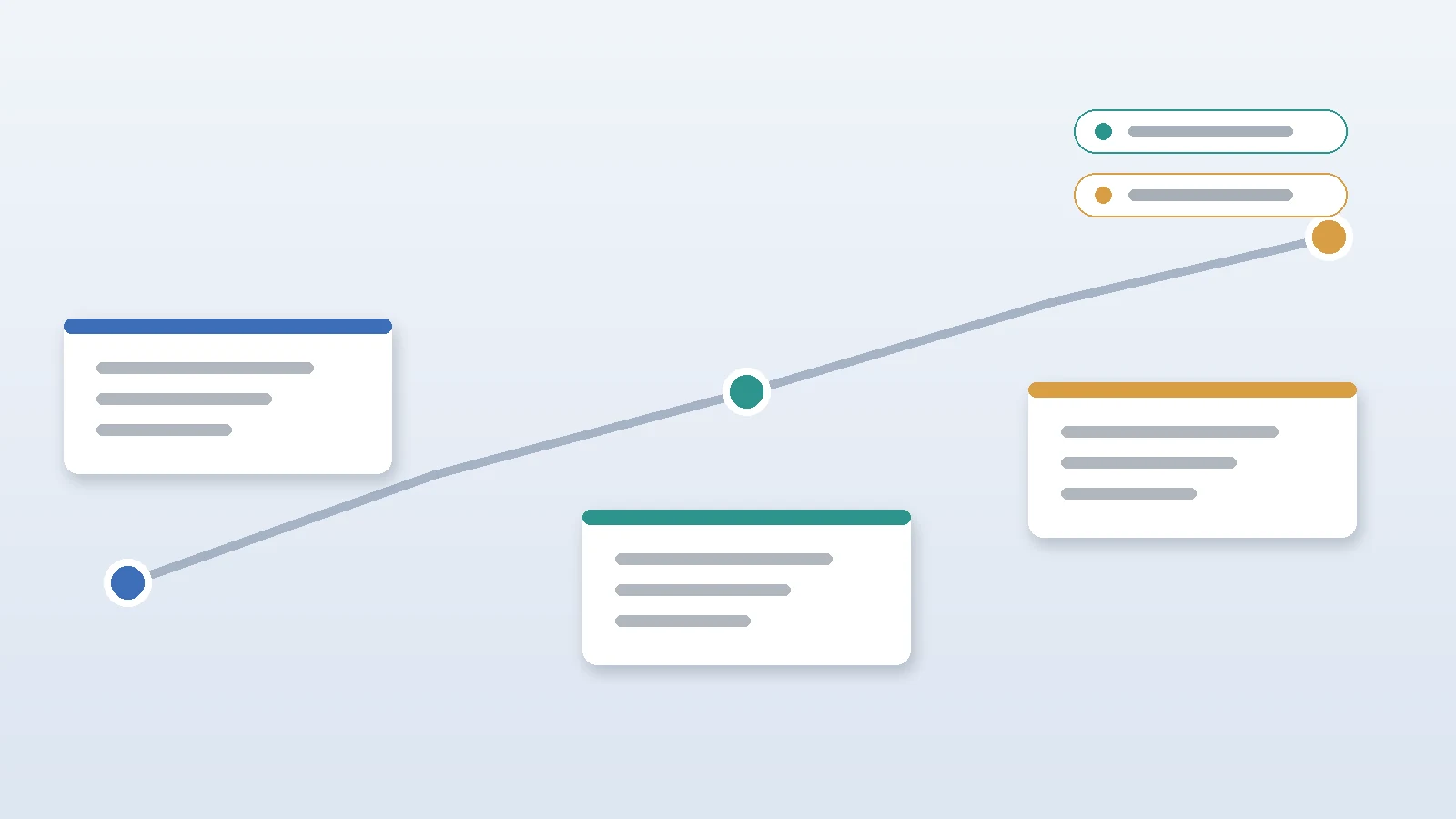
Intent analysis is not an academic exercise. It determines what you ask the reader to do next. A mismatch here is one of the most expensive mistakes in content marketing.
| Intent Type | Buyer Stage | Content Goal | CTA Type | Example CTA |
|---|---|---|---|---|
| A: Awareness | Early awareness | Educate, build trust | Soft | ”Download our beginner’s guide to CRM selection” |
| B: Selection | Active evaluation | Guide decision criteria | Medium | ”Get our CRM selection checklist (PDF)“ |
| C: Comparison | Late evaluation | Drive preference | Strong | ”Start a free 14-day trial—no credit card” |
| D: Application | Evaluation to purchase | Match product to scenario | Strong | ”Tell us your team size and use case for a custom recommendation” |
| E: Technical | Learning / pre-evaluation | Build expertise credibility | Soft-Medium | ”Book a 15-minute technical consultation” |
| F: Design/Engineering | Development | Support their build | Medium | ”Request a material sample kit or design review” |
The Conversion Exit Rule
Every blog post must have at least one conversion exit—a clear path from the content to a business outcome. The exit must match the intent strength:
- Awareness content that ends with “Request a demo” is a mismatch. The reader just learned what a CRM is. They are not ready to talk to sales. The CTA feels pushy. They bounce.
- Comparison content that ends with “Subscribe to our newsletter” is a waste. The reader is one decision away from purchase. Give them a trial, a quote form, or a live chat with product support.
Action: Before writing any article, write this sentence: “After reading this, the ideal next step for the reader is _______.” If the answer is “learn more,” the CTA should be a guide download or email course. If the answer is “buy or try,” the CTA should be a product page link, trial signup, or quote request.
FAQ
Q: What if the top 10 results are mixed—some blog posts, some product pages, some videos?
Mixed SERPs indicate Google is unsure of the dominant intent. This is an opportunity. Analyze which type is ranking highest and which type you can realistically produce. If you are a brand with strong product pages, a product page might work. If you are a publication or blog-first site, an editorial angle is safer. When in doubt, match the type of the #1 result.
Q: Can one article serve multiple intents?
Rarely, and only if the intents are closely related and the SERP shows mixed results. In practice, trying to serve two intents in one article usually serves neither well. A “what is + how to choose” hybrid often ranks for neither query because the first 200 words are split between definition and criteria. If you have two strong intents, write two articles and link them.
Q: How do I handle intent when the keyword is ambiguous?
Search the term and look at PAA and related searches. If PAA asks both “What is X?” and “How much does X cost?”, the intent is split. Check whether the top results are mostly educational or mostly commercial. If it is 50/50, pick the intent that aligns with your business goal and your ability to rank. A new blog should probably target the educational angle first and build authority before tackling the commercial angle.
Q: Should I update old content when I realize the intent was wrong?
Yes, and this is one of the highest-ROI activities in SEO. If an article targeting a comparison keyword was written as a generic explainer, rewrite the H1, H2s, and first 200 words to match comparison intent. Add a comparison table. Change the CTA. Republish with an updated date. We have seen pages jump from page 3 to page 1 with this single change.
Q: How does intent analysis change for local service businesses?
Local intent adds a geographic layer. Keywords like “best plumber” are implicitly “best plumber near me.” The SERP will show map packs, local business listings, and review sites. Your content strategy must include local landing pages with neighborhood-specific angles (“emergency plumber in Downtown Austin”) and Google Business Profile optimization alongside blog content.
What Comes Next
Once you have classified the intent for each keyword in your list, the next job is architectural. You need to group those keywords into topic clusters so each page has a clear job and does not compete with its neighbors. A selection guide and a comparison article might target similar keywords, but they serve different intents and belong in different positions in your cluster.
After clustering, every article needs a keyword-to-page map with a conversion target that matches its intent. The CTA for an awareness article should not be the same as the CTA for a comparison article. Map the journey stage to the ask, or you will waste the traffic you worked hard to earn.
And before you write, lock in a differentiated angle in your content brief that gives readers a reason to choose your result over the others on page one. Intent tells you what to write. Angle tells them why yours is worth reading.
Last updated: June 2026