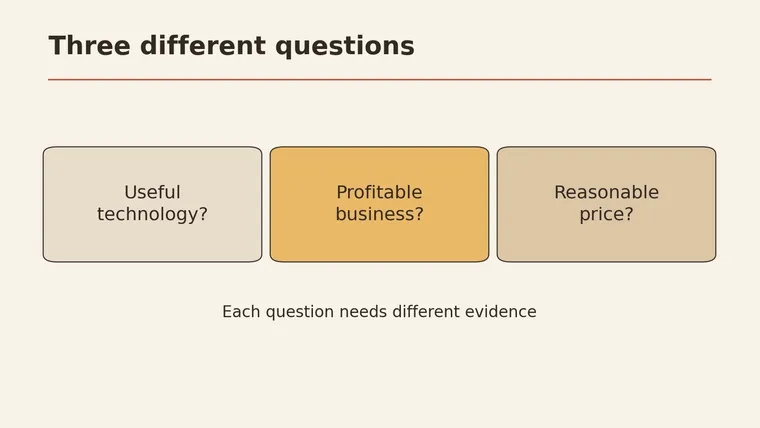
If you’ve ever asked “what is an AI bubble?”, the short answer is this: it’s the worry that prices and spending tied to AI have run ahead of what the technology and the businesses using it will actually earn. The phrase mixes three separate questions. Is the technology useful? Can companies make enough money from it? And are today’s prices a reasonable bet on that future? A “yes” to the first doesn’t settle the other two. The World Economic Forum makes a similar distinction between AI’s potential, the money pouring into it, and bubble worries, and it warns that comparisons with past bubbles can’t tell us how this one ends (World Economic Forum). This article explains the idea. It doesn’t predict anything and isn’t investment advice.
Below you’ll find a three-column reading card, a fully fictional business example, four questions to ask of any headline, and a short list that keeps checkable facts apart from forecasts.
What people mean by an AI bubble
A bubble, in everyday money talk, is when the price of something rises far above what most people would later agree it was worth, mainly because buyers expect prices to keep rising. When expectations change, prices can fall quickly.
When people talk about an AI bubble, they usually mean one or more of these:
- Company share prices linked to AI have risen faster than those companies’ earnings
- Spending on chips, data centers, and AI projects may be larger than the income it will bring back
- Expectations about how fast AI will change work and profits may be too optimistic
Each of these is an argument that is still open to debate. Some analysts make them; others disagree. Reading the debate well starts with noticing which of the three a writer is talking about.
Why historical comparisons only go so far
Articles often compare AI with the dot-com boom of the late 1990s or the tulip mania of the 1600s. These comparisons can help you picture what a bubble looks like. But the WEF piece points out that history doesn’t hand us a script: similar-looking situations can turn out very differently (World Economic Forum).
A useful way to read a comparison: “This shows one way things could go,” not “This shows how things will go.”
Separate three different questions
Most confusion in AI bubble talk comes from merging three questions into one. Keep them apart.
| Question | What it asks | What counts as evidence |
|---|---|---|
| 1. Is the technology useful? | Does it do real tasks people value? | Real-world use, independent evaluations, adoption you can verify |
| 2. Can businesses make money from it? | Do revenues cover costs, and will they keep doing so? | Reported revenue, costs, and profit from company filings or reliable reporting |
| 3. Are prices reasonable? | Does today’s price fairly reflect likely future profits? | Assumptions about growth, margins, and interest rates, which are always estimates |
Notice how the evidence changes. Question 1 can often be checked by using the product. Question 2 needs numbers from companies. Question 3 rests on assumptions: guesses about the future that nobody can fully check today.
Three-column reading card
This card was designed for this article. When you read an article about an AI bubble, sort each claim into one column.
AI BUBBLE READING CARD

TECHNOLOGY EVIDENCE        REVENUE EVIDENCE          PRICE ASSUMPTIONS
(is it useful?)            (does it make money?)     (is the price fair?)

Claim: ___________         Claim: ___________        Claim: ___________
Source: __________         Source: __________        Source: __________
Date: ____________         Date: ____________        Date: ____________
Fact or opinion? ___       Fact or opinion? ___      Whose assumption? ___

What's missing?            What's missing?           What would change it?
___________________        ___________________       ___________________
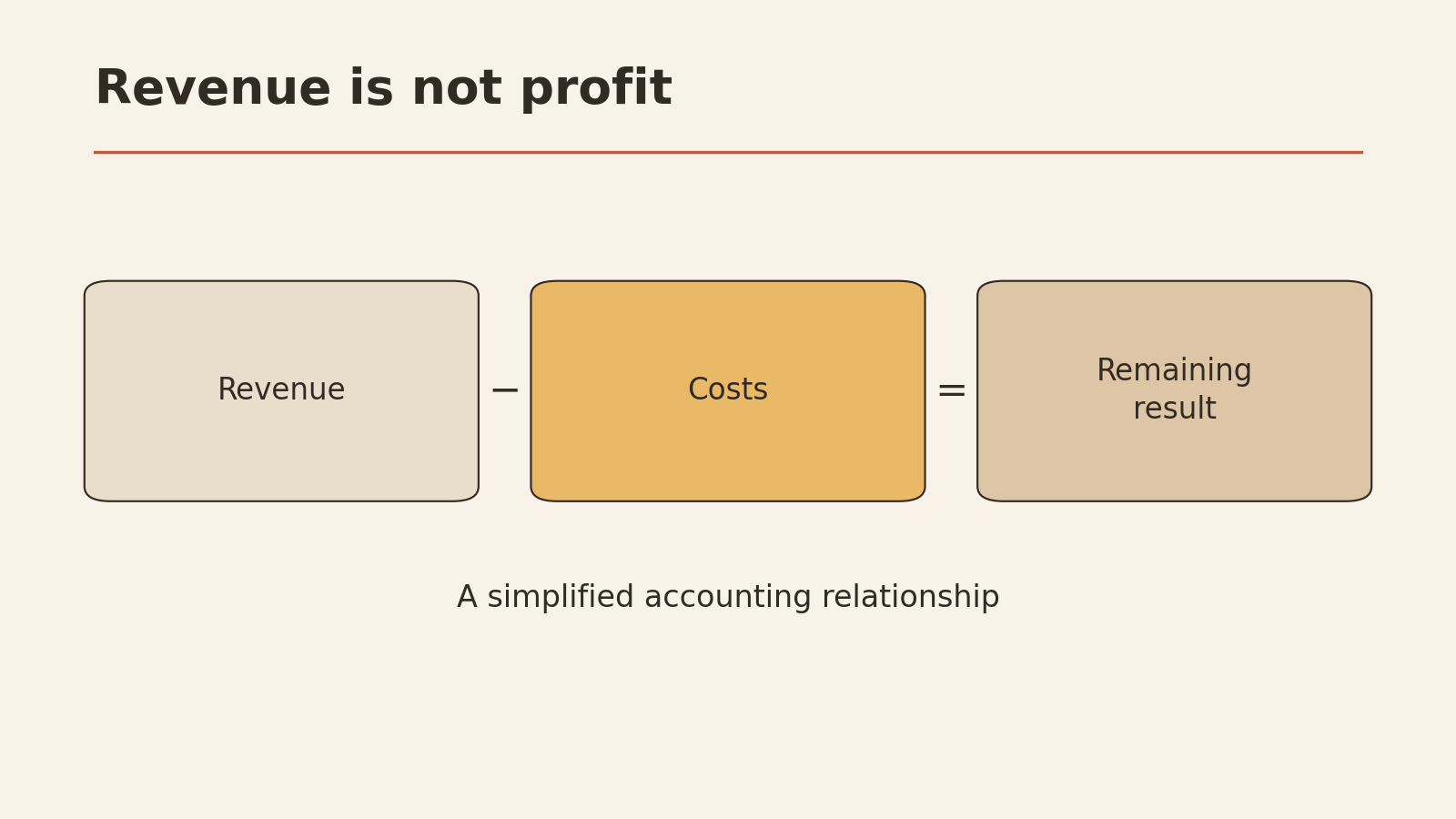
If an article jumps from column 1 (“AI can write code”) straight to a conclusion in column 3 (“so these prices are justified” or “so this is a bubble”), it has skipped column 2. That gap is worth noticing.
”Useful” doesn’t mean “any price is fair”
A fictional example makes the point. Imagine a made-up company, Brightline Notes, that sells an AI note-taking subscription. Everything below is invented for illustration.
- Question 1, useful? Yes. Customers use it every day and say it saves effort.
- Question 2, profitable? Not yet. Each customer pays a monthly fee, but running the AI for each customer, plus support and development, costs more than that fee today. The company expects costs to fall over time.
- Question 3, fair price? It depends on assumptions. If costs fall and customers stay, the business could become profitable. If costs stay high, competitors offer the same thing for less, or customers leave, it may never earn enough to justify a high price.
A great product can still be a poor investment at the wrong price, and a modest product can be a fair one at a low price. Usefulness is necessary but not enough.
Investment
When commentators talk about “AI investment,” they can mean two different things:
- Business spending: companies building data centers, buying chips, and hiring to develop AI. This is often called capital expenditure, or capex: money spent on long-lasting things like buildings and equipment.
- Investor money: people buying shares in companies linked to AI.
These are connected but not the same. A company might spend heavily on AI because it expects future income. Investors then decide what that future income is worth today.
Fidelity, in its educational piece on the topic, lists several angles people use to judge whether AI-related prices are stretched: earnings growth, the quality of those earnings, valuation, whether capex can be sustained, and interest rates (Fidelity). That’s one firm’s analytical framework. It makes no forecast and offers no guarantee. It’s useful as a list of questions to ask.
| Angle | Plain question to ask |
|---|---|
| Earnings growth | Are profits actually rising, or only expected to rise? |
| Quality of earnings | Do profits come from ongoing sales, or from one-off items? |
| Valuation | How much are buyers paying for each unit of current profit? |
| Capex sustainability | Can the spending continue if income grows more slowly than hoped? |
| Interest rates | If borrowing gets more expensive, does the math still work? |
This article doesn’t quote current spending totals or share prices. Those numbers change quickly, and figures in older articles go out of date fast.
Expectations
Prices today reflect what people expect tomorrow. That’s where bubble debates mostly live.
Back to the fictional Brightline Notes. Imagine two readers who agree on every fact about the company but expect different futures:
| Reader A (optimistic, fictional) | Reader B (cautious, fictional) | |
|---|---|---|
| Cost of running the AI | Falls fast | Falls slowly |
| Customers who stay each year | Most | Many leave for cheaper rivals |
| New customers | Grow steadily | Growth slows |
| Conclusion | The business could be worth much more than today | Today’s price already assumes too much |
Neither reader is lying. They hold different assumptions. When you read an argument about an AI bubble, try to find the assumptions and ask whose they are.
Opinion, labeled as opinion
Some of the most widely shared pieces are commentaries. For example, Yale Insights published a piece on October 8, 2025, about how an AI bubble could burst (Yale Insights). It’s an author’s viewpoint. Scenarios and trading details described in commentary like that are arguments to weigh. Nobody has confirmed them as current facts.
A quick habit: before you repeat a claim, add who said it and when. “A Yale Insights commentary from October 2025 argues…” carries very different weight from “AI stocks will crash.”
Risk
Talking about risk doesn’t mean predicting a crash. It means asking what could go wrong, and for whom.
Some risks people discuss in general terms:
- Spending gets ahead of income. If companies build more capacity than customers will pay for, some of that spending may not pay off.
- Profits arrive later than hoped. A useful technology can take years to turn into steady profit.
- Borrowing costs change. Higher interest rates make future profits worth less today, which can affect prices (Fidelity).
- Competition squeezes prices. If many firms offer similar AI tools, it may get harder for any one of them to charge enough.
And some things this article won’t do:
- Say when, or whether, any bubble will “pop”
- Name specific stocks or tell you to buy, sell, or hold anything
- Quote current prices, losses, or investment totals without a checked source
If you’re making real money decisions, talk to a qualified, independent adviser who knows your situation.
Keep facts and forecasts in separate lists
When you collect notes on the topic, split them in two:
| Can be checked now | Forecast or opinion |
|---|---|
| A company’s reported revenue for a past period, from its filings | ”Revenue will triple in three years” |
| The date an article was published, and who wrote it | ”This is just like the dot-com bubble” |
| What a product does today, by trying it | ”AI will replace most office work” |
| An institution’s stated framework | Any date for a market fall |
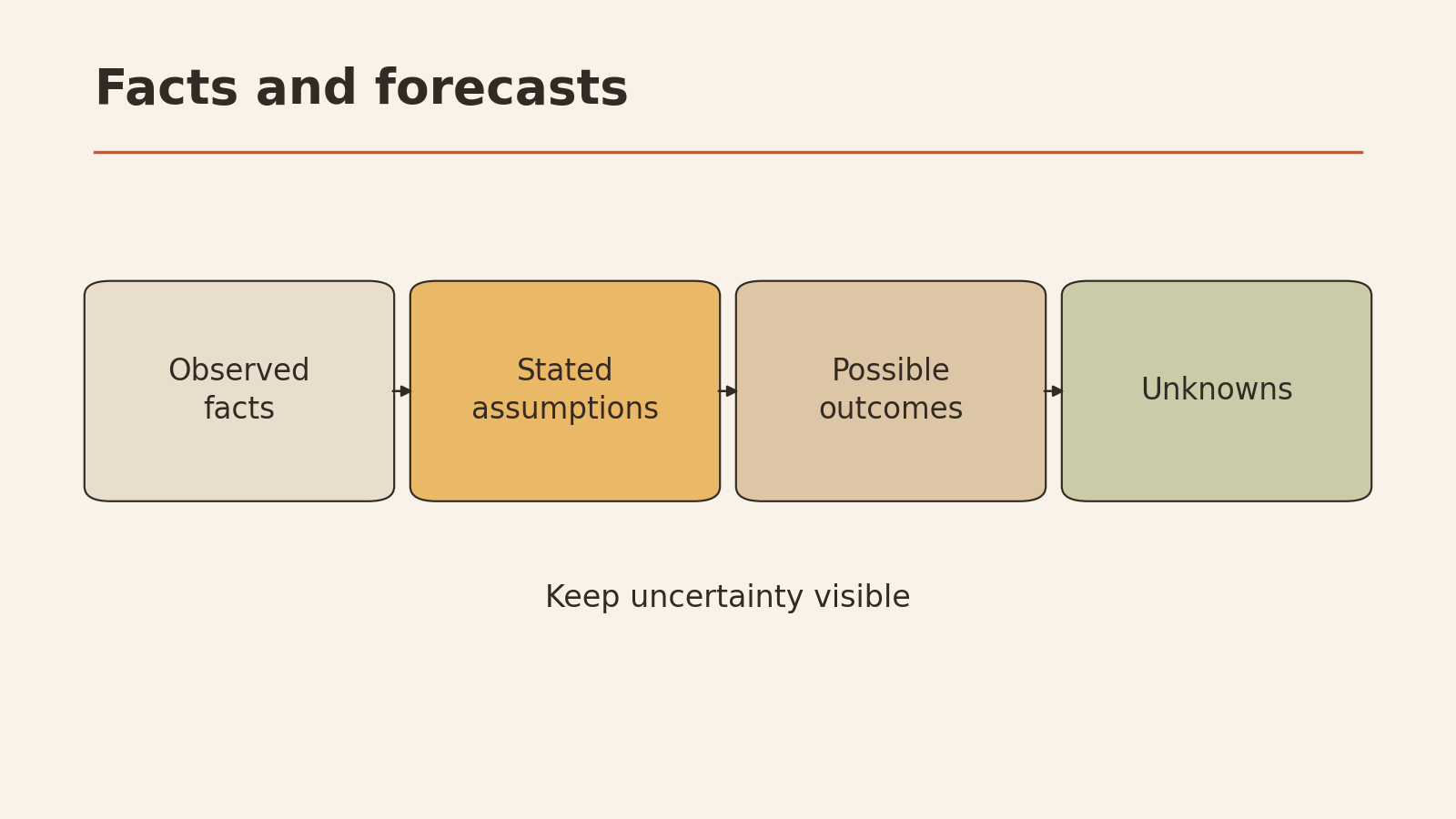
Keep the right-hand column clearly labeled. It’s fine to read forecasts; just don’t let them slide into the left-hand column.
For more on staying calm with a flood of AI news, see does AI make information overload worse?. If you want the bigger picture of how credit and cycles work, read how the economic machine works.
A reading checklist for the next headline
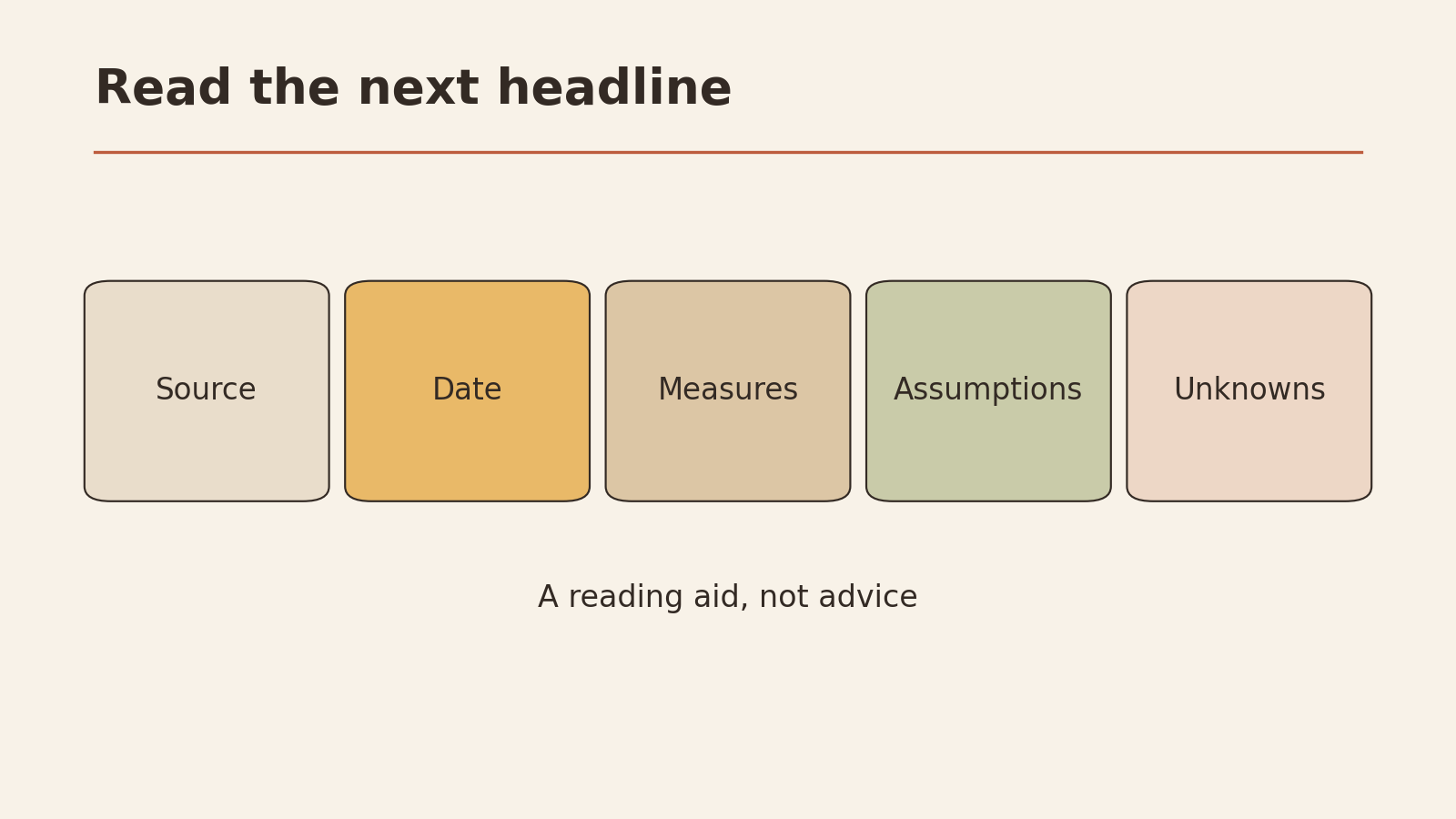
Next time a headline says “AI bubble,” ask four questions before you react:
- Source: Who said this? A reporter, an analyst, a company, a commentator? What might they gain?
- Time: When was it published, and when were any numbers measured? Old figures can mislead.
- Measure: What exactly is being counted: share prices, company spending, revenue, users? Is it the same measure across comparisons?
- Unproven assumptions: What has to happen in the future for the claim to be true? Is that stated, or hidden?
Your AI bubble check card
This card was designed for this article. Fill it in for one article you read this week.
AI BUBBLE CHECK CARD

Headline: ____________________________
Source and author: ____________  Date: ____________
Fact, analysis, or opinion?  ____________

Which question does it mainly address?
  [ ] Is the tech useful?  [ ] Does it make money?  [ ] Is the price fair?

Numbers used, and when they were measured: ____________
What's being measured (prices / spending / revenue / users): ______
Assumptions about the future: ____________
Anything that sounds like advice or a date for a crash?  Y / N

My summary in one sentence, with source and date:
____________________________
Your next low-risk step
Pick one article about an AI bubble. Fill in the check card and sort its claims with the three-column reading card. Then write a single sentence that says who claimed what, and when, without adding your own prediction.