
AI can describe running in detail. You still have to run to find out what it feels like in your own body.
Writing and learning can have the same gap: an AI tool produces a fluent explanation before I can explain its evidence. Critical thinking here means checking claims, noticing assumptions, considering alternatives, and being able to explain why I accept a conclusion.
For a formatting job, a finished file may be all I need. For learning to judge an argument or write a scene, the reasoning is part of what I came to do.
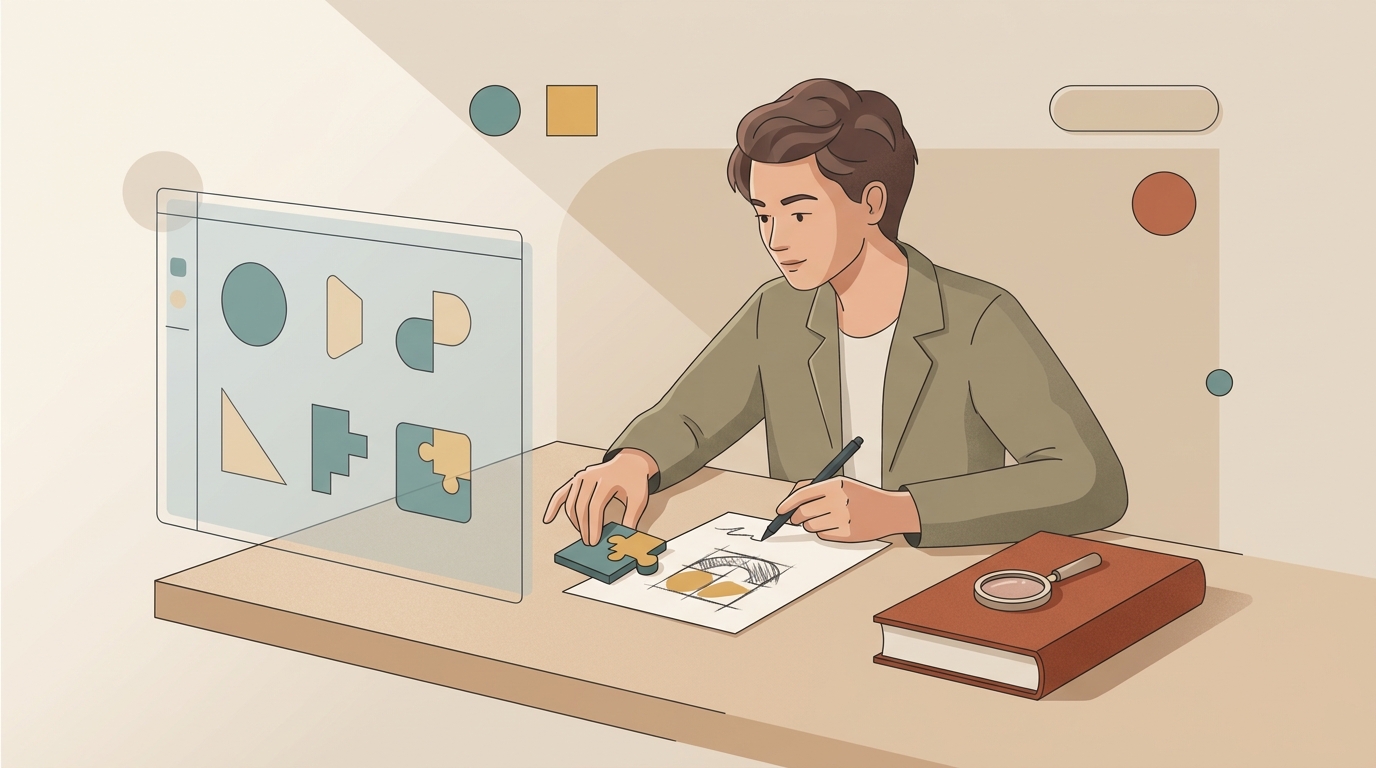
The draft and the reference book stay within reach.
Decide what you want to be able to do afterward
Before asking for the complete answer, finish this sentence: “After this task, I want to be able to ___ myself.”
The answer changes the kind of assistance that makes sense. If you want a set of notes converted into a table, delegating the conversion can be useful. If you want to understand the evidence behind a claim, receiving an attractive table of conclusions leaves much of the work untouched.
The task needs context and judgment. What is needed in this situation? What feels wrong in a scene? Which kind of page would answer a reader’s question? A model can offer candidates, while the person doing the work often holds relevant background that never made it into the instructions given to the tool.
That background still needs checking. Where I lack expertise, I need suitable references or someone qualified to review the result.
Decide the task before collecting more instructions or paying for a larger usage allowance. Extra capacity can help with a known need. Without a task, it leaves the question of what to do unanswered.
Better assisted performance can conceal a learning gap
A 2025 field experiment published in the Proceedings of the National Academy of Sciences makes this distinction concrete. It involved nearly a thousand mathematics students at one Turkish high school. Students using an unrestricted GPT assistant performed 48% better during practice relative to the control group. In a later assessment without assistance, that group performed 17% worse relative to the control group.
The percentages describe relative differences. A tutoring version with learning safeguards largely mitigated the negative effect. The study concerns a particular subject, school, and design; it gives us no universal result for every kind of AI assistance.
What makes it useful here is the change in the task conditions. With assistance, the work looked better. Remove the assistance and a different capability became visible. If I want to learn, I need some opportunity to see that second result.
Workplace research asks a related question from another angle. Lee and colleagues’ 2025 study at the CHI human–computer interaction conference surveyed 319 knowledge workers and collected 936 first-hand examples of generative-AI use. Higher confidence in AI was associated with less self-reported critical thinking; confidence in one’s own ability to do the task was associated with more. The reported thinking also shifted toward checking, integrating, and managing outputs.
This was a survey, so it establishes no permanent cognitive decline or causal change in intelligence. It does direct attention to what a user does with an answer. Checking and integrating can require real thought. Accepting something because it sounds competent can leave that thought undone.
Leave yourself an answer to argue with
You don’t have to solve the whole problem alone first. Write what you currently believe, the evidence you have, and the part you can’t explain. A rough attempt gives the conversation an object.
For an article, that might be one claim and one example. For a calculation, write the quantities and the relation you think connects them. For a decision, describe the options and what would change your preference.
Then ask for a challenge:
Here is my tentative explanation. Find the weakest assumption, offer a reasonable alternative explanation, and say what evidence would distinguish them. Separate facts from guesses. Don’t rewrite the whole piece yet.
Treat the prompt as a way to try the exercise. Assess the challenge it produces. A confident objection can be as poorly supported as a confident answer.
If ten objections arrive, follow the one most likely to change the conclusion. Otherwise, critical-thinking practice can become another collection exercise: a growing list of clever counterarguments, none examined closely.
In fiction, several explanations can open different paths for a character. In a factual article, an explanation needs support. A psychologically convincing account of why someone acted tells you what could be possible. Evidence is still needed before attributing that motive to a real person.
Follow the consequential claim back to its source
A link is a starting point for verification. Open it and compare what was measured with what the answer says.
If an answer claims that research proves a method works, look for the participants, comparison, outcome, and study design. If it says a tool supports a feature, check current official documentation and the permissions available to you. If it interprets someone’s behavior, consider what you actually know and which other explanations fit.
You can scale this effort to the consequences. Brainstorming fictional possibilities leaves room for speculation. A public factual article needs a traceable basis for its important claims. Medical, legal, and financial decisions may require qualified professional review.
When a central claim cannot be supported, narrow it, mark the uncertainty, or leave it out. The task may need a slower answer. Rephrasing the same unsupported claim more cautiously won’t supply the missing evidence.
Private information has its own constraint. Give the tool only material you have permission to share. Remove identifying details where they aren’t needed to explain the problem. Wanting a more tailored answer doesn’t settle whether a document should be uploaded.
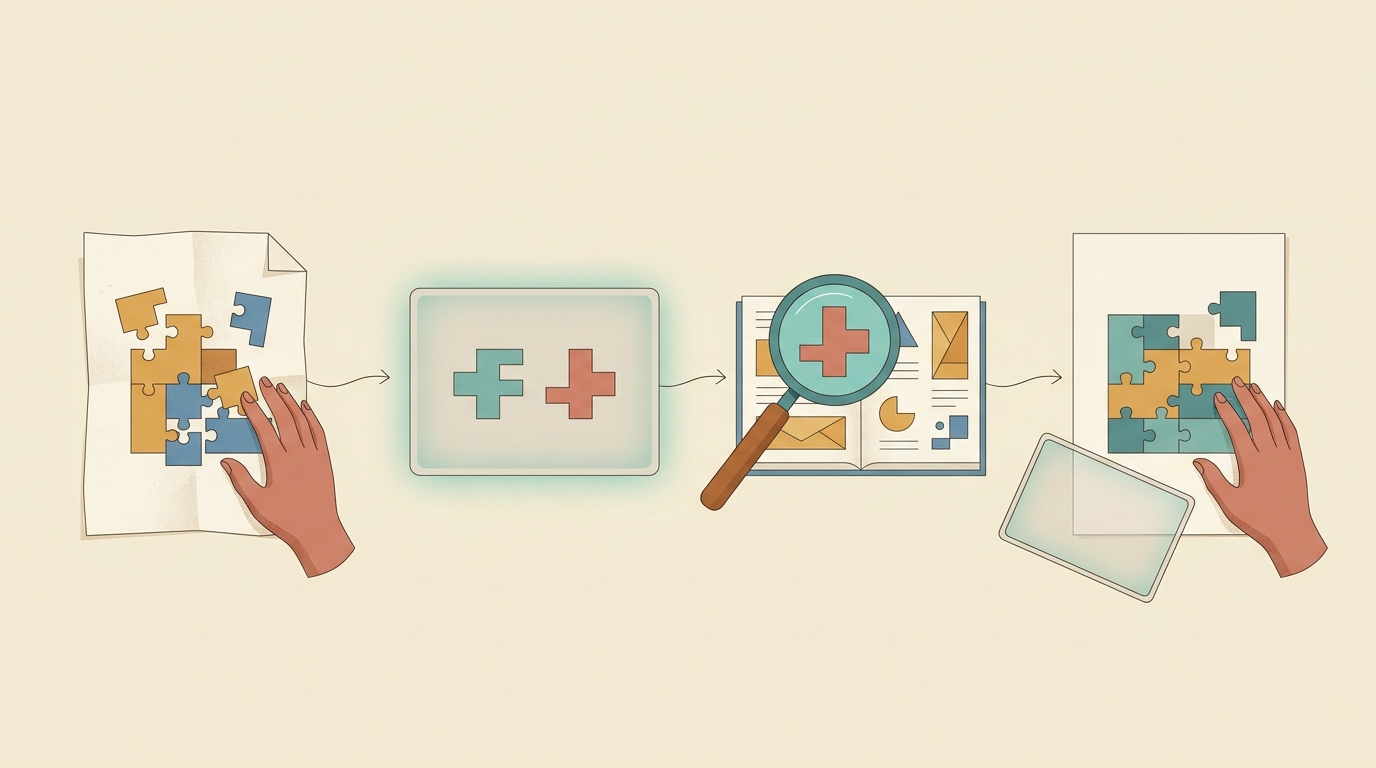
An independent attempt comes before the AI suggestions.
Close the tool at a point where you can test yourself
After working through a concept, try a related problem without the assistant. Change enough details that repeating the earlier answer won’t be sufficient.
Suppose you have been learning confirmation bias: the tendency to favor evidence that supports an existing belief. Write a new example, such as deciding that an app is bad and reading only negative reviews. Explain which behavior supports that interpretation, then consider another possibility—for example, whether the person was specifically investigating faults. Compare your reasoning with a reliable explanation of the bias or informed feedback. This tests more than reciting its name.
For writing, the test may be a new scene. Can you decide where to delay a reply? Can you explain which detail changes the reader’s understanding of a character? A polished sample may show that a technique is available. Making a new choice yourself shows what you can currently do with it.
If the attempt falls apart, return for a hint or explanation, then try again. You have located something to learn. For a completely unfamiliar field, an introductory explanation can come before the first attempt; independent practice still needs a place after it.
This check also helps distinguish two legitimate goals. Sometimes you wanted a better paragraph and got one. Sometimes you wanted to become better at writing that paragraph. Judge the result against the goal you actually chose.
Keep a short account of the decisions
A useful record can fit beside the work: what I thought at first, what challenged it, which claim I checked, and what remains unresolved. Include the reason for accepting or rejecting a suggestion. That gives you something more informative to revisit than the prompt alone.
There is no need to turn this into a formal score for critical thinking. Save the decisions that could matter next time, and return to the activity.
If the task is hard to describe, write its purpose, available evidence, constraints, and desired output before asking for help; asking better AI questions gives more examples. If explanations keep accumulating, choose one idea and one related task you can attempt without assistance; turning saved ideas into daily action offers additional ways to make that attempt manageable.
On the next learning task, leave one piece for yourself after the chat is closed: a new example to explain, a claim to verify, a scene to write. Keep the AI’s answer nearby for the later comparison. First see what you can do without opening it.