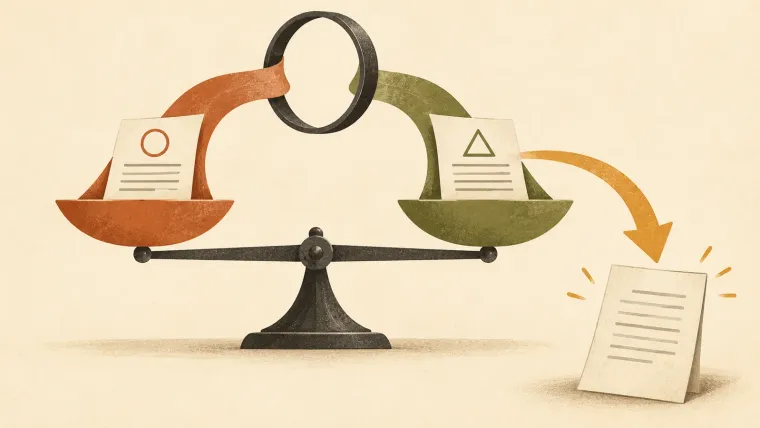
A closed mindset is a pattern of protecting a belief from scrutiny: dismissing an objection before understanding it, rejecting inconvenient evidence, or treating criticism of an idea as criticism of yourself. Look at what you do during a specific disagreement. Do you ask what happened, or explain why the other person must be wrong? An open mindset leaves room to examine the claim and revise it when the evidence warrants. To practice that, choose one belief, name what would count against it, and agree on a fair way to check. Growth mindset concerns whether abilities can develop; openness concerns how you respond to another view.
What a closed mindset means
In this guide, closed mindset describes a way of responding to information. Imagine a colleague says customers are confused by a form you designed. You reply, “They just need to read it properly,” before looking at a single example. Your conclusion may eventually be right. The closed part is deciding before examining the objection.
Disagreeing, having confidence, and refusing a weak argument do not by themselves show closed-mindedness. A useful question is whether you would apply the same standard of evidence to your preferred explanation and its strongest alternative.
The signs below are prompts for reflection. They have no diagnostic score, and one difficult conversation does not establish a person’s character.
Closed mindset vs. open mindset
| Situation | A closed response | A more open response |
|---|---|---|
| Someone challenges your explanation | Defend it before asking what they mean | Clarify the objection and examine its evidence |
| A result contradicts your prediction | Find a reason to disregard it immediately | Check the method, then consider revising the prediction |
| You receive feedback | Argue about the person’s tone while leaving the claim unexamined | Separate how the feedback was delivered from what it says |
| You say you might be wrong | Leave the conditions for changing your mind unspecified | Name a finding that would change your conclusion |
Open-mindedness still involves judgment. You can understand an argument, check it fairly, and reject it. You can also reconsider one part of a belief while retaining the rest.
Signs and examples of a closed mindset
These are hypothetical examples. Use them to examine a recent exchange, rather than to label someone you dislike.
1. You reject the objection before you can explain it
Example: A friend questions your travel plan, and you defend the itinerary before finding out which connection worries them.
Try: “Which part looks risky?” Then explain their concern back to them and let them correct your account.
2. You change the standard when evidence becomes inconvenient
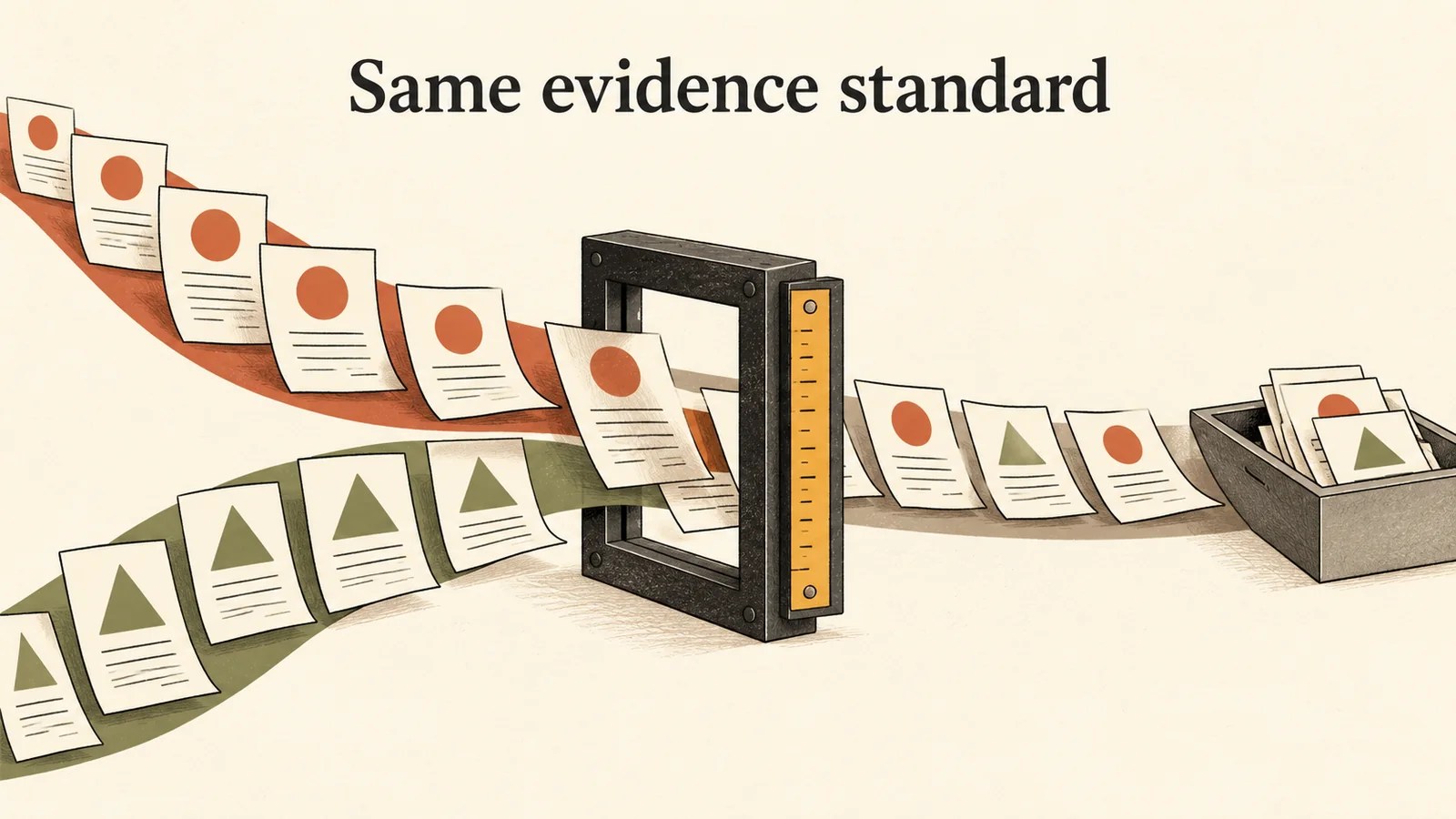
Apply the same evidence standard to your preferred explanation and its alternative.
Example: You agree that customer complaints deserve investigation. When complaints concern your own design, you decide those customers are too inexperienced to count.
Try: Set a rule for which reports matter before reviewing them. Apply it to both your design and the alternative.
3. You look for support without checking the strongest alternative
Example: You search only for success stories about a tool you already want to buy. You never read a documented failure involving the task you need it for.
Try: Ask, “What is the most credible reason this would fail for my use case?” Check the actual conditions, not just the headline.
4. You treat an error as a verdict on your competence
Example: A teammate finds a mistake in your estimate. You spend the conversation explaining how experienced you are, while the incorrect assumption remains in the calculation.
Try: Identify the disputed assumption. You can correct an estimate without settling a debate about your overall ability.
5. You cannot name anything that would change your mind
Example: You believe a meeting format wastes time. Asked what would make you reconsider, you answer, “Nothing. I know how these things go.”
Try: Specify an observable condition: shorter meetings that still resolve the decisions they were meant to address. If you cannot define a fair test, first make the claim more precise.
6. You assume a motive instead of checking an explanation
Example: A delayed reply becomes proof that a colleague does not respect you. You have not checked their schedule or whether they received the request.
Try: Write down the observation separately from your interpretation. Hanlon’s razor offers another explanation to check when you are quick to infer bad intent. It does not require ignoring repeated harmful conduct.
Closed mindset vs. fixed and growth mindsets
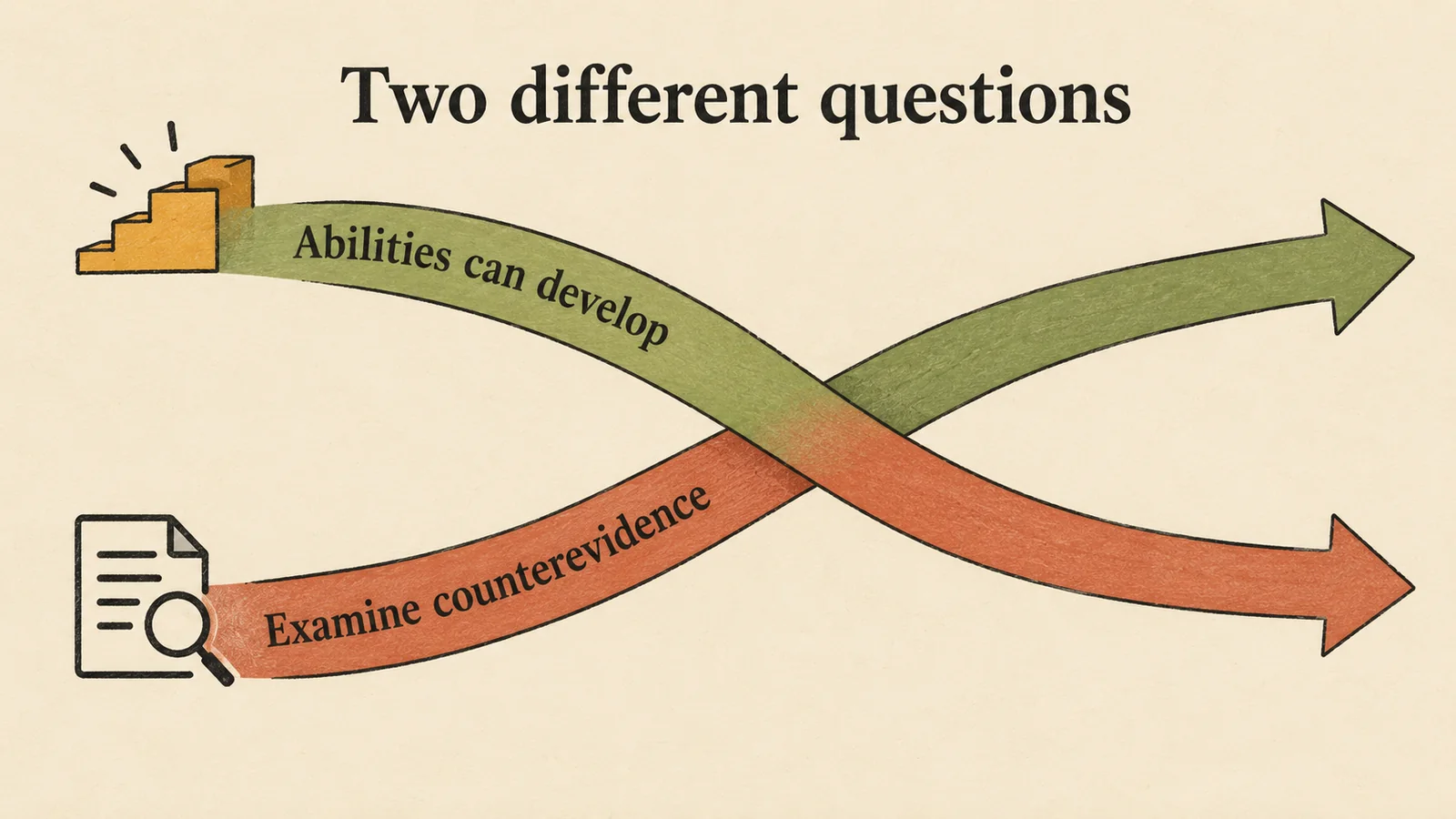
Considering counterevidence and believing abilities can develop are different questions.
The terms answer different questions:
- Open or closed: How willing am I to examine a competing explanation?
- Growth or fixed: Do I believe an ability can develop?
Stanford’s Teaching Commons describes growth mindset in terms of a learner’s belief that intelligence can develop. That definition concerns learning and ability, so it should not be used as a synonym for considering contrary evidence.
Someone can believe presentation skills are learnable while refusing to consider feedback on their own presentation. Conversely, someone can hold a fixed belief about one ability while being willing to revise a factual claim when shown better evidence. These are conceptual examples, not a validated four-type personality test.
There is research connecting the ideas. Porter and Schumann’s paper reports four studies of intellectual humility and openness to opposing views. In the first two, the disagreements were imagined; the third examined exposure to opposing political perspectives. Participants reporting greater intellectual humility tended to show more openness. The fourth tested a growth-mindset prompt and reported increased intellectual humility and openness. These findings support a connection in the settings studied. They do not make the concepts identical or prove that a particular conversation exercise will work for everyone. Read the researchers’ paper.
What can make a conversation close down
Before assigning a cause, ask what is happening in this particular exchange:
- Is the claim tied to something you feel you must defend? A choice you made, your reputation, or a group you identify with?
- Are you trying to finish too quickly? If a decision is urgent, distinguish what must be decided now from what can be checked later.
- Is the feedback specific enough to examine? “Your plan is terrible” gives you less to work with than an example of a failed handoff.
- Are you treating agreement as the only acceptable outcome? Decide whether the task is to understand the other view, choose an action, or persuade someone.
These questions help locate an obstacle. They do not establish a universal cause of closed-mindedness.
How to open a closed mindset
Choose a modest disagreement you are willing to revisit. Use this sequence as an editorial practice tool, not a guaranteed intervention.
- State a checkable belief. Replace “This team never communicates” with “The handoff is missing the information the receiving team needs.”
- Describe the strongest objection fairly. Ask the other person whether your description captures their concern. Correct it before answering.
- Name counterevidence in advance. Write what would make you narrow or revise the belief. Use the same standard for your preferred explanation and its alternative.
- Choose a fair test. Review relevant examples or try a small, reversible change. Agree on what you will observe before seeing the result.
- Review the claim. Record what changed, what remains uncertain, and why you are keeping, narrowing, or revising your conclusion.
If a test affects other people, consider what it might change beyond the immediate result. Second-order thinking can help you check those consequences before trying it.
A worksheet for your next disagreement
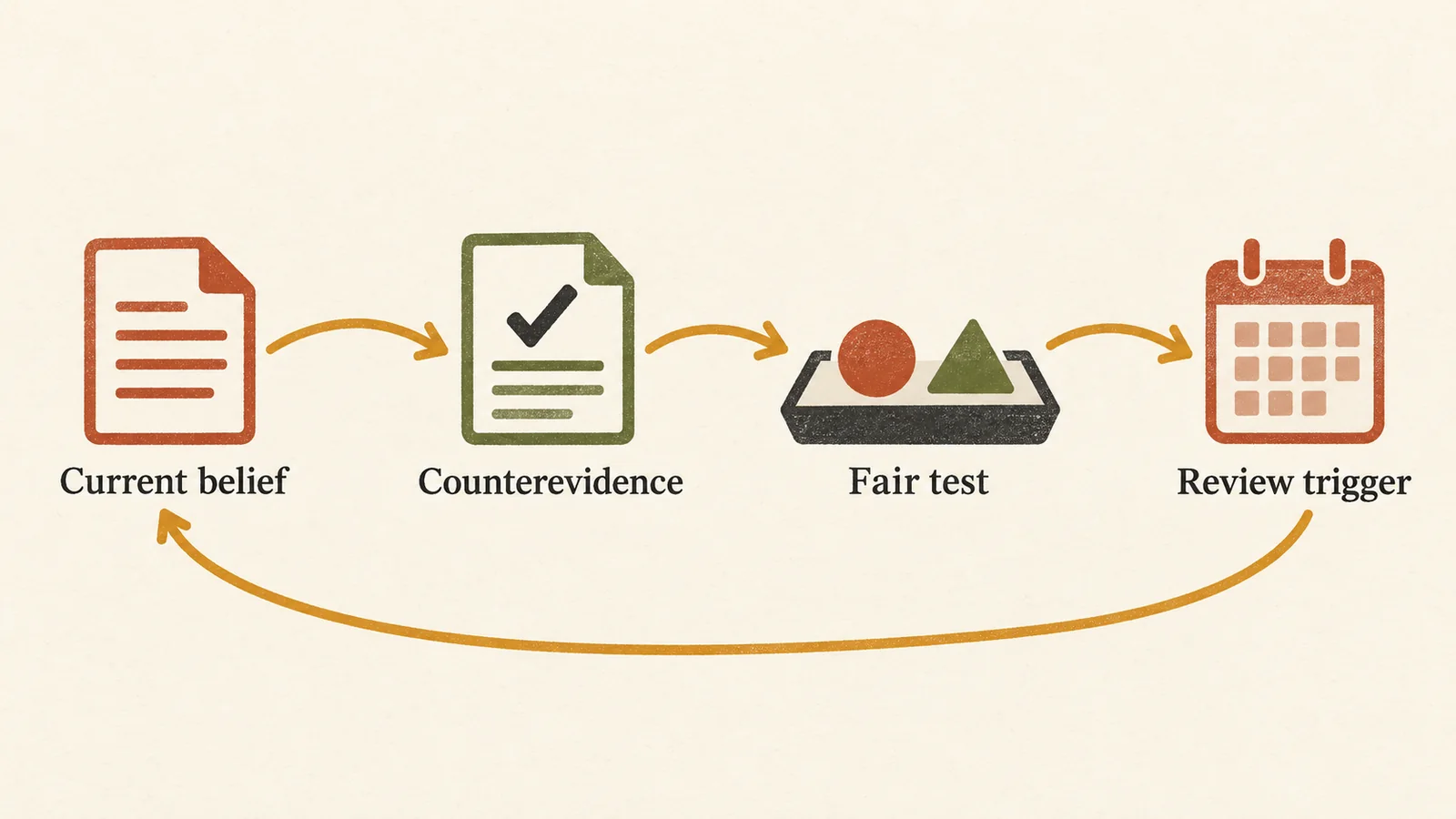
Write a belief, specify counterevidence, agree on a fair test, and schedule a review.
This worksheet is an original editorial tool for the guide. It has not been validated as a psychological assessment.
| Prompt | Your notes |
|---|---|
| What exactly do I believe? | |
| What observation led me to that belief? | |
| What is the strongest competing explanation? | |
| What evidence would count against my belief? | |
| What fair, low-cost check can we agree on? | |
| What result or date will trigger a review? | |
| After checking, what will I keep, narrow, or revise? |
For a hypothetical workplace example, suppose you believe a weekly meeting wastes time. A colleague says it prevents repeated work. Your competing explanation is that the meeting does have a useful function, but its format is inefficient. Propose a shorter format for the next cycle, while recording whether the needed decisions get made and whether work is repeated afterward. Agree to review both observations. If the shorter meeting creates unresolved handoffs, that is evidence against removing the coordination function; it does not automatically justify every part of the old format.
That last distinction matters. Revising a claim need not mean switching to its exact opposite.
When someone else will not engage
Discuss a specific claim or decision rather than accusing the person of having a closed mindset. Ask what evidence they would consider, offer one concrete example, and check that you have understood their objection.
If they will not agree to any way of examining the issue, you can end the exchange or set a boundary. At work, document the unresolved decision and the information needed to make it. With friends or family, it may be enough to explain what you are willing to discuss and when you need to stop. Openness does not oblige you to stay in an insulting or unsafe conversation.
Frequently asked questions
What is a closed mindset?
A closed mindset protects a current belief from examination. Examples include dismissing an objection before understanding it or refusing to specify what evidence could change your conclusion. This guide uses the term as a description of behavior in a situation.
What causes a person to be closed-minded?
You cannot identify a cause from one disagreement. Start with the specific obstacle: a vague accusation, a rushed decision, a belief the person feels compelled to defend, or a disagreement about what counts as evidence. Ask about that obstacle before assuming a motive.
What are the key differences between an open and a closed mindset?
An open response gives a competing explanation a fair examination and leaves room to revise a belief. A closed response protects the preferred explanation from that examination. Agreement is not the test: someone can understand your view and still have good reasons to reject it.
For your next disagreement, fill in the worksheet’s first four rows before responding. Then choose one fair check. Find more tools for examining decisions in the Cognition collection.