
Your information diet is the mix of news, books, conversations, social posts, videos, and recommendations you encounter. To curate it, decide which sources deserve a place and what you want from the time you spend with them.
Start with an ordinary evening. If you leave the computer off, what will you do? One possible arrangement is to bring some water and a book to the bedside. Having a concrete alternative makes it easier to see what the screen currently fills.
The same question works for a feed or a subscription. If it disappeared tomorrow, what would I actually miss? A useful source, people I care about, a particular kind of pleasure? Sometimes the answer is surprisingly hard to name.
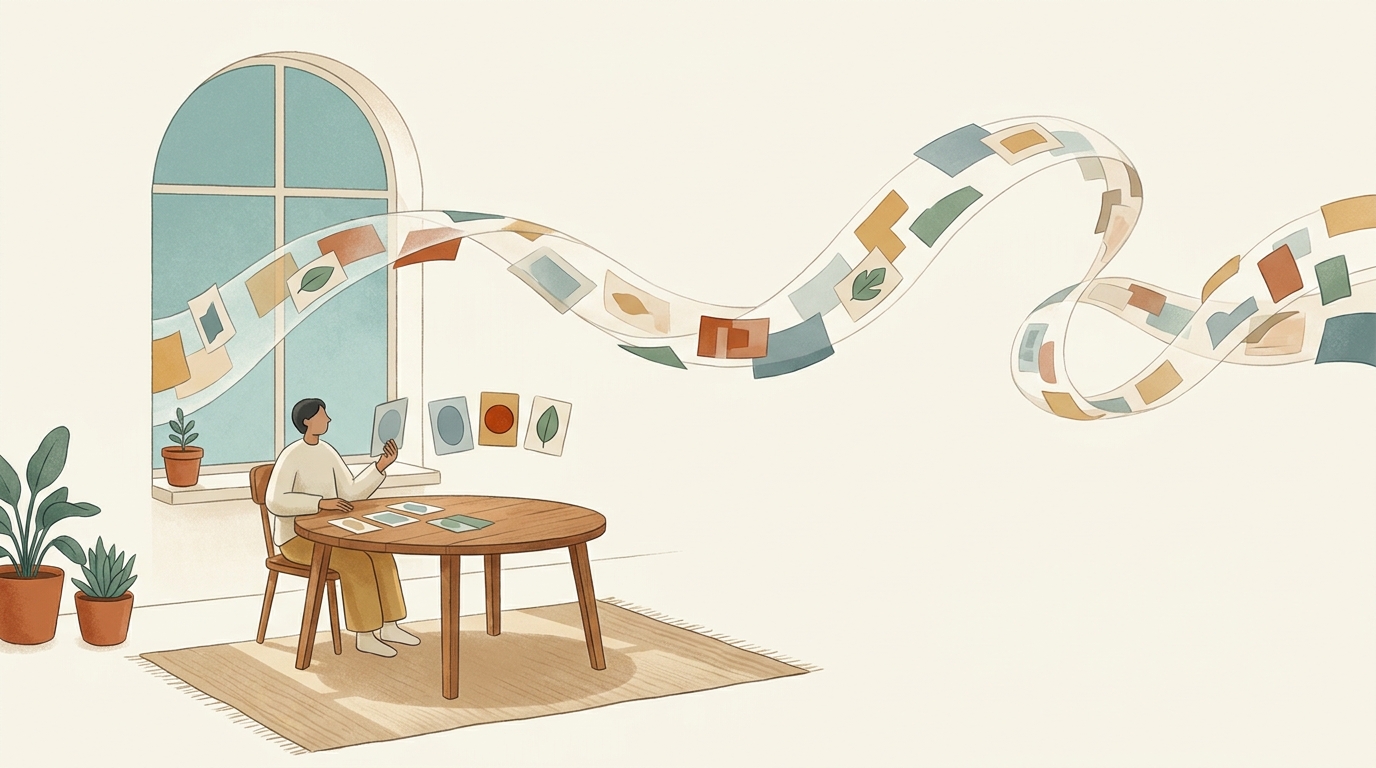
Cards can be kept, set aside, or left to pass.
Some things deserve a place because you like them
Information doesn’t always have to be useful. I may want warmth, humor, or the feeling that someone else recognizes a part of ordinary life.
Calling this mix a “diet” can help us notice repeated exposure. It can also turn reading into another performance review. Every novel suddenly has to build a skill; every video needs an educational defense.
I don’t want that version.
Enjoyment is a sufficient reason to read a story. Reliability is a separate question. A creator can make you feel understood and still be wrong about an election, a medical treatment, or a study. Keeping the pleasure doesn’t require lending them authority on everything else.
That distinction also works in the other direction. A careful report may leave you unsettled and still be worth reading. “How did this make me feel?” tells you something about the experience. To assess a factual claim, you need evidence.
Notice what your surroundings make seem normal
People and things we encounter often become familiar parts of our surroundings. A feed adds another set of people to that environment, even when we never speak to them.
If almost everyone you follow is announcing growth, an uneventful week can start to look like failure. If conversations repeatedly become status comparisons, you may find yourself preparing a defense before you have anything to say. Those are reasons to examine the environment. They don’t establish that media determines someone’s personality; work, relationships, and material circumstances matter too.
The useful question is smaller: which standards keep arriving, and do I want to keep using them?
The Reuters Institute’s 2024 Digital News Report found that 39% of respondents across 47 markets sometimes or often avoided the news, up three percentage points from 2023. That’s a historical survey result, with a particular sample and year. It gives some context for news fatigue without explaining every person’s experience.
For my own choices, I would look more closely than total screen time. An hour spent investigating a question and an hour spent refreshing updates can leave very different things behind. Even the refreshing might have served a purpose at first: a break, company, something to do between tasks. That purpose matters when deciding what to change.
Try the missing-source question
Choose one source you encounter often. Imagine losing it for a week, then finish these two sentences:
I would miss ___ .
I would probably do ___ instead.
The second answer is easy to skip. Removing a feed that provides company leaves a gap in company. Moving an app off the home screen changes access; it doesn’t automatically provide a satisfying evening.
“Use my phone less” leaves the next action open. Putting a book and some water within reach gives the evening another possible shape. You can try the arrangement and see whether it meets the need that the feed was serving.
For someone else, the replacement could be a particular podcast, a walk, or a message to a friend. It should answer the need that sent them to the feed. Choosing an activity because it sounds virtuous is likely to leave the original need waiting.
A source can also survive this test. Perhaps an online group is where you hear from friends who live elsewhere. Perhaps a creator’s ordinary-life videos genuinely cheer you up. Keep the function you value, then look at whether the surrounding recommendations need the same access.
How to curate your information diet without rebuilding your life
A short source audit is enough to begin. Over a few days, jot down what you opened, what you wanted from it, and what you actually got. One line per encounter will do. There is no useful “quality-content percentage” to calculate here.
A small audit could look like this:
| Source | What brought me there | What would justify keeping it? |
|---|---|---|
| An industry briefing | A question relevant to current work | Information I can trace and use |
| A novelist or creator | I like spending time in that world | The experience itself |
| A recommendation feed | I wanted a break | An actual break I enjoy |
| A writer I disagree with | I want to check my view | Reasons and evidence worth considering |
Then make a change at the source. You can leave the rest of your schedule alone for now.
A genuinely useful source can stay where it is. An important but endless source, such as news, may work better through a deliberate visit or a chosen briefing. Notifications make sense where your responsibilities require prompt attention; many others can wait until you open the source yourself.
A repeatedly disappointing feed can lose its place on the home screen. Unfollowing an account is also an option. You don’t have to prove that the platform is evil or that everyone who enjoys it is shallow. You can simply decide that you no longer want this particular input so often.
For a source that provides something valuable alongside a great deal of noise, try separating the two. Visit the person or group directly. Save the program you meant to watch. An app may contain several quite different activities, and leaving one doesn’t require abandoning all of them.
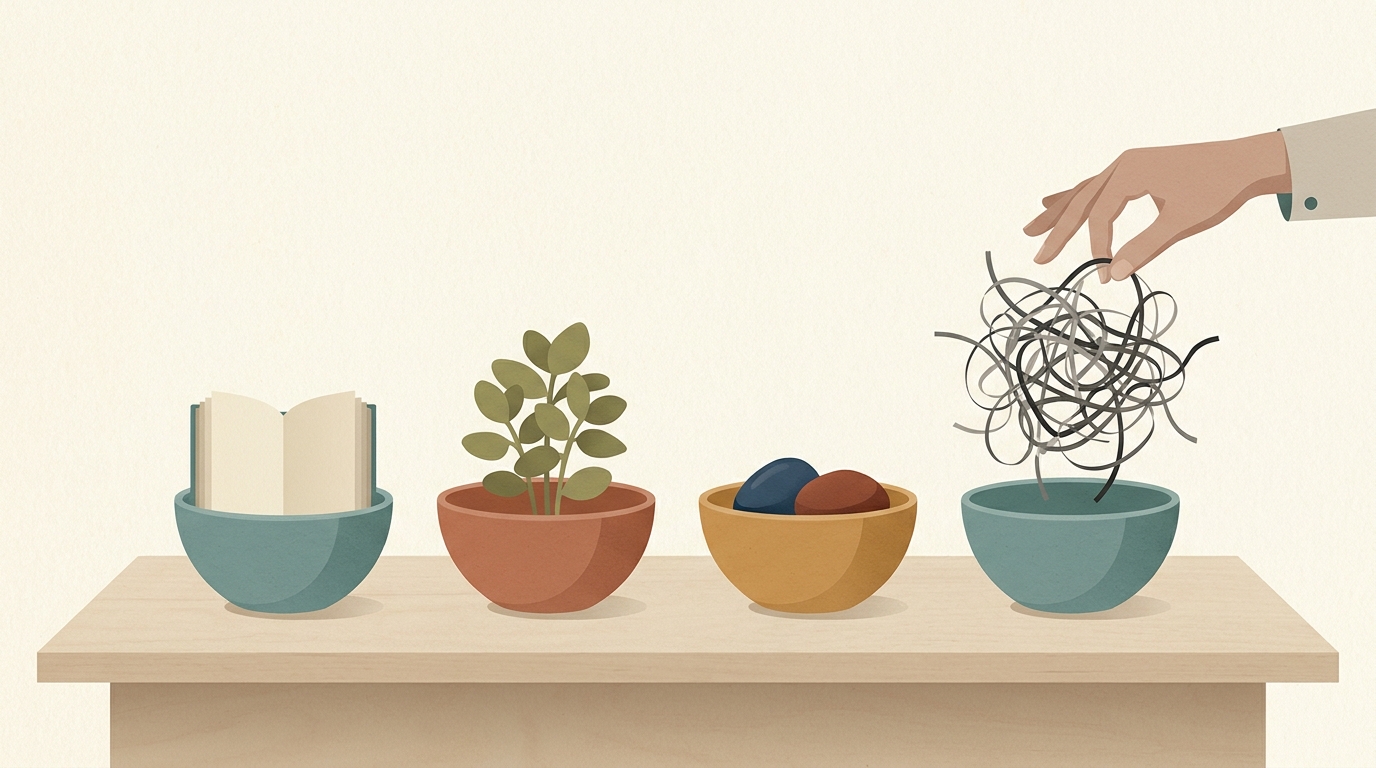
Leave room for useful information, pleasure, and disagreement.
Keep a way to hear things you would rather avoid
There is a real risk in choosing only what feels pleasant: eventually, inconvenient facts start to look like bad content.
A useful disagreement has something to examine. The person makes a claim, gives reasons, and allows you to locate the evidence or understand the trade-off. Repeated insults add little, however uncomfortable they make you. Discomfort alone tells you very little about a source’s value.
When a dispute concerns a number, check its definition and origin. When it concerns competing priorities, name those priorities. More statistics won’t necessarily settle a disagreement about what should matter most.
One study makes the cost of withdrawal especially clear. In an American Economic Review paper published in 2020, researchers recruited 2,743 Facebook users around the 2018 US midterm election. Four weeks of deactivation improved some measures of well-being while reducing factual news knowledge.
The platform, election period, and recruited participants limit how far to carry that finding. Even within those limits, it describes a trade-off worth noticing. Feeling better and knowing more can move in different directions. Before removing a news feed, work out where important information will come from afterward.
That might be a reliable briefing, direct sources for your work, or a small set of publications you actively visit. The point is to retain an information path you can name. Silence can feel peaceful while leaving a practical question unanswered.
Give useful information a destination; let pleasure remain pleasure
Material read for a task benefits from a next use. A saved explanation might help with the draft on your desk. A finding may change a decision, or need checking before you repeat it. Writing that use beside the link makes it easier to return with a purpose.
I keep a distinction here because otherwise the audit becomes exhausting. A novel owes me no action item. Neither does a funny conversation. Some inputs help me do something; some are part of what I want the day to contain.
For task-related material, choose one saved item, name the task it can help with, and write the next action beside it. The guide to turning saved ideas into daily action has more examples. If you already know the next action but keep leaving it, try one work interval with a timer and only the necessary material open; the focus-timer guide offers a longer walkthrough.
Start with the source you had trouble explaining when you imagined it gone. Change its access, keep a way to get anything important it supplied, and see what fills the space. Leave the rest of your information environment alone long enough to notice the difference.