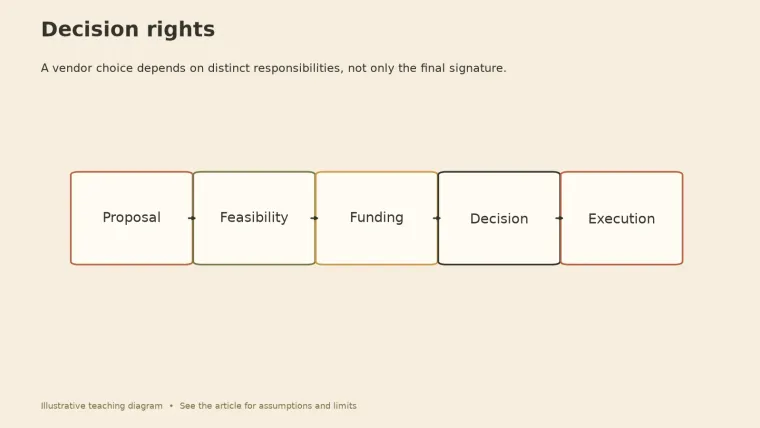
Power dynamics in the workplace describe how authority, expertise, information, resources, and relationships affect what gets decided and carried out. A job title tells you part of the story, but a proposal may depend on people who filter options, approve funding, interpret requirements, or implement the result. Map one concrete decision rather than assuming the most senior person controls every step. Clarify who provides input, who decides, and who executes. Use observable rules and actions to identify influence, then choose a practical next step such as obtaining missing information, making criteria visible, or resolving an unclear approval responsibility.
Definition
A manager may own the final choice while finance controls whether the selected option can be funded. A technical specialist may determine whether an option is feasible. A frontline employee may know a practical constraint absent from the proposal.
French and Raven’s social-power framework distinguishes several bases of influence, including legitimate authority and expertise. The role map here is an original practical application, not a new validated taxonomy.
For the broader mechanism and the thirteen-lens overview retained from the original article, see power dynamics. This page concentrates on workplace decisions and responsibilities.
Workplace examples
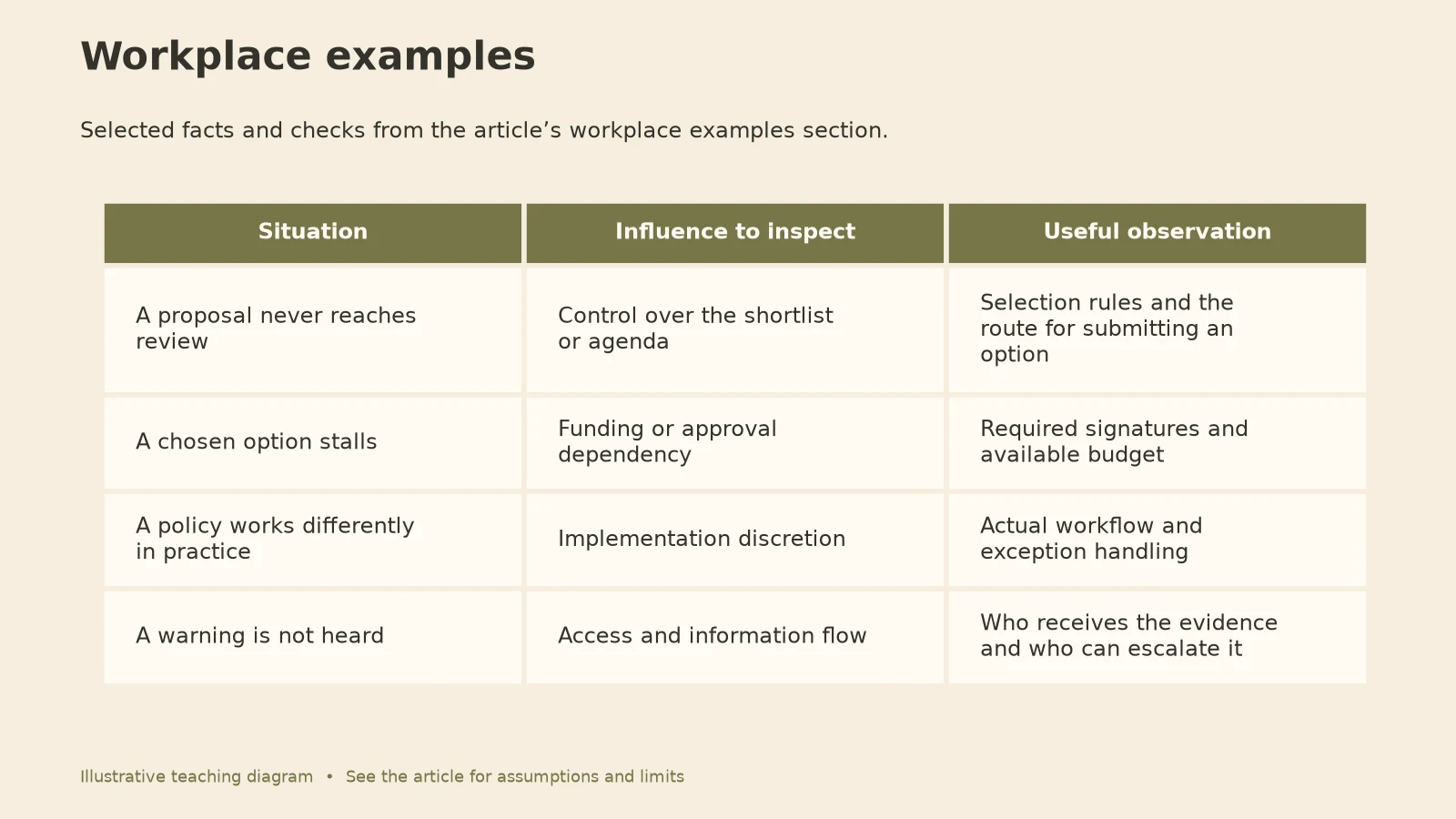
| Situation | Influence to inspect | Useful observation |
|---|---|---|
| A proposal never reaches review | Control over the shortlist or agenda | Selection rules and the route for submitting an option |
| A chosen option stalls | Funding or approval dependency | Required signatures and available budget |
| A policy works differently in practice | Implementation discretion | Actual workflow and exception handling |
| A warning is not heard | Access and information flow | Who receives the evidence and who can escalate it |
These patterns do not prove improper conduct. A shortlist can exclude an option for a valid requirement. An approval can wait because relevant evidence is missing. Start with the process and the observable action.
The information-asymmetry guide helps identify who knows what and how a gap can be checked. Hanlon’s razor helps retain plausible benign explanations without discarding accountability.
Decision rights
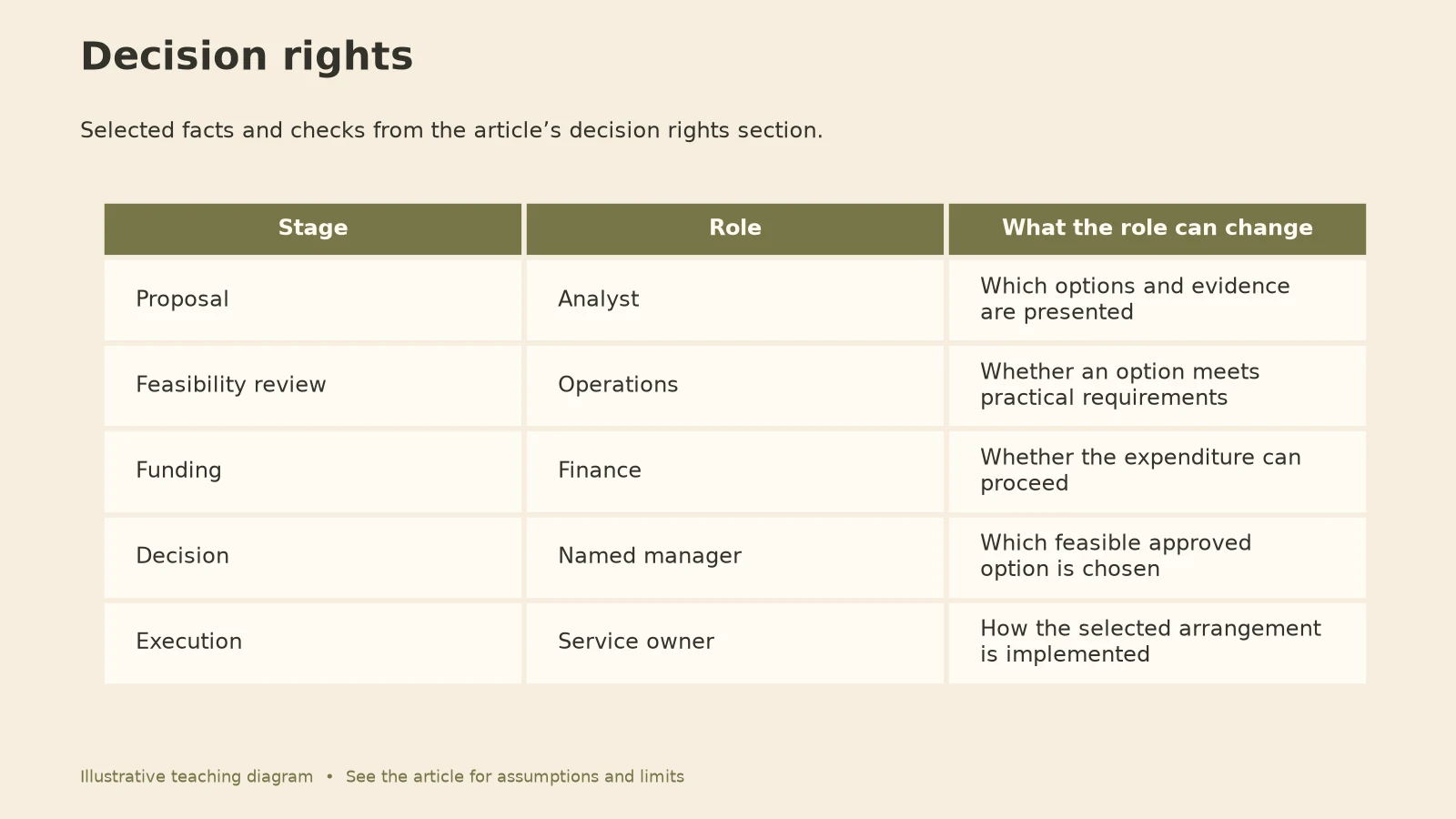
Consider a hypothetical vendor selection. The sponsor wants a reliable service, the analyst prepares a comparison, operations checks whether the service fits, finance approves expenditure, and a manager commits to the choice.
| Stage | Role | What the role can change |
|---|---|---|
| Proposal | Analyst | Which options and evidence are presented |
| Feasibility review | Operations | Whether an option meets practical requirements |
| Funding | Finance | Whether the expenditure can proceed |
| Decision | Named manager | Which feasible approved option is chosen |
| Execution | Service owner | How the selected arrangement is implemented |
A vague instruction that “everyone is responsible” can hide a missing decision right. Several people may advise, but one role or defined group still needs authority to commit.
The roles can overlap in a small organization. The map should reflect the actual arrangement rather than impose a complicated chart. Where an approval is required, record what it checks and the evidence needed.
OpenStax’s group-decision discussion highlights the benefits and risks of combining views. Consultation should add relevant information while preserving clarity about who decides.
Practical audit
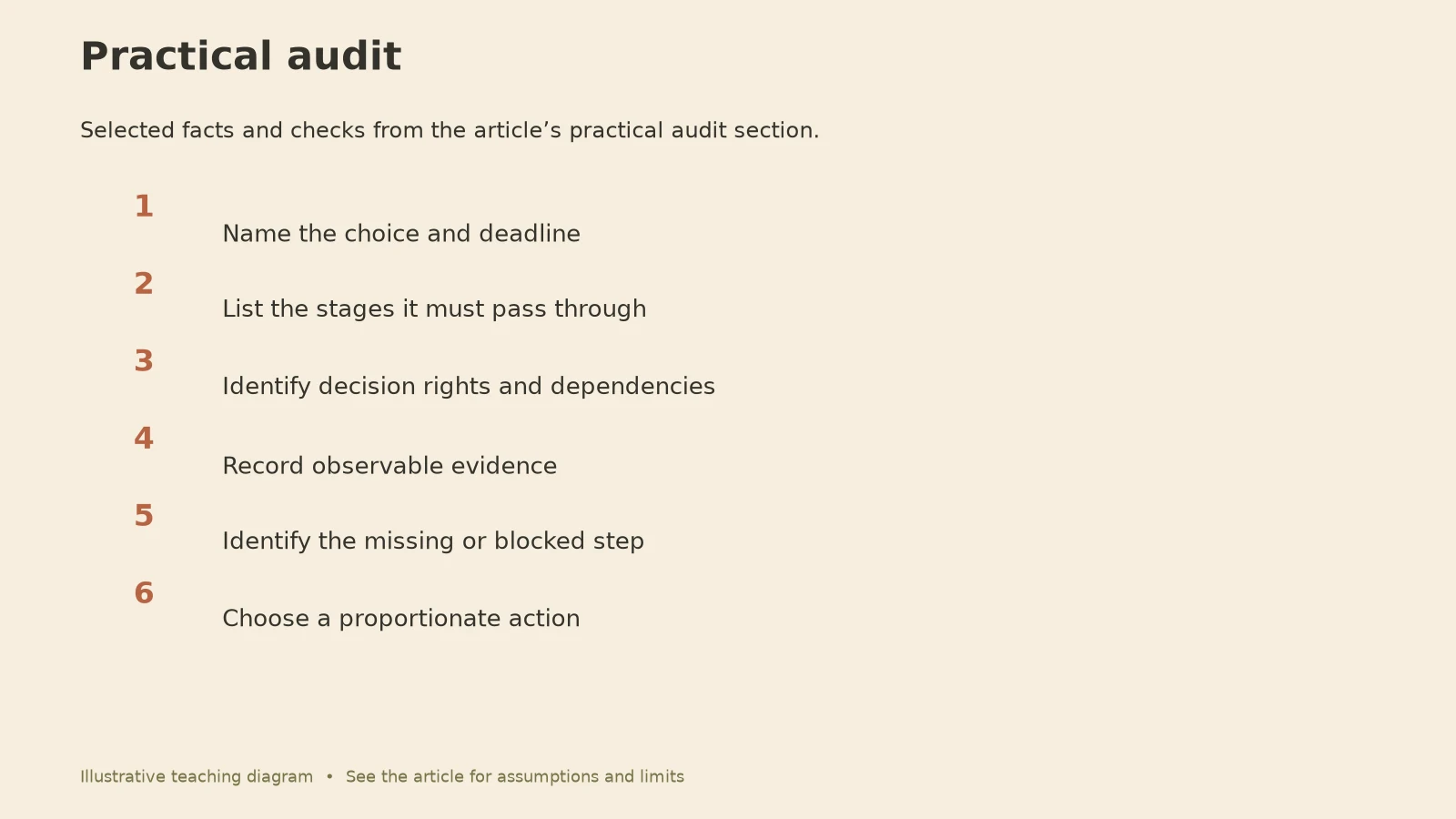
Use this original workplace map for one live decision:
- Name the choice and deadline. Avoid trying to map the whole organization at once.
- List the stages it must pass through. Include proposal, review, funding, commitment, and execution where relevant.
- Identify decision rights and dependencies. Separate giving advice from approving or committing.
- Record observable evidence. Use rules, actual handoffs, and decision records.
- Identify the missing or blocked step. State what information or responsibility is unclear.
- Choose a proportionate action. Obtain the evidence, clarify the owner, or use the appropriate escalation route.
For the vendor example, a practical next step might be: “Finance needs a comparable scope and a total-cost estimate before approval. The analyst will provide those, and the manager will decide after feasibility review.” This is more actionable than “finance always blocks us.”
Do not infer motives from a delay alone. Check whether the request reached the right person, met the stated requirements, or competed with other work. Repeated unexplained exceptions may warrant a closer process review, but the evidence should specify the behavior.
Influence can be used to make the process clearer. Give relevant specialists a route to flag constraints early. Record criteria before evaluating favored options. Keep unresolved concerns in the decision record so the owner can review them after action.
For the meeting process, use group decision making. For checking the claims within a proposal, use critical thinking in the workplace. This guide concerns operational influence and decision rights, not legal advice or an assessment of a particular employment dispute.
Questions
Does the person with the highest title always have the most influence?
They may hold final authority, but other participants can shape available options, information, funding, and implementation. Examine the decision chain.
How do I improve my influence constructively?
Provide relevant evidence, understand the requirements of the next stage, make practical constraints visible, and follow through on an agreed responsibility. Clear contributions are more useful than unexplained confidence.
What if several people appear to own the same decision?
Clarify the decision rule and commitment authority through the appropriate process. Shared input is useful; ambiguous responsibility can leave a proposal unable to proceed.